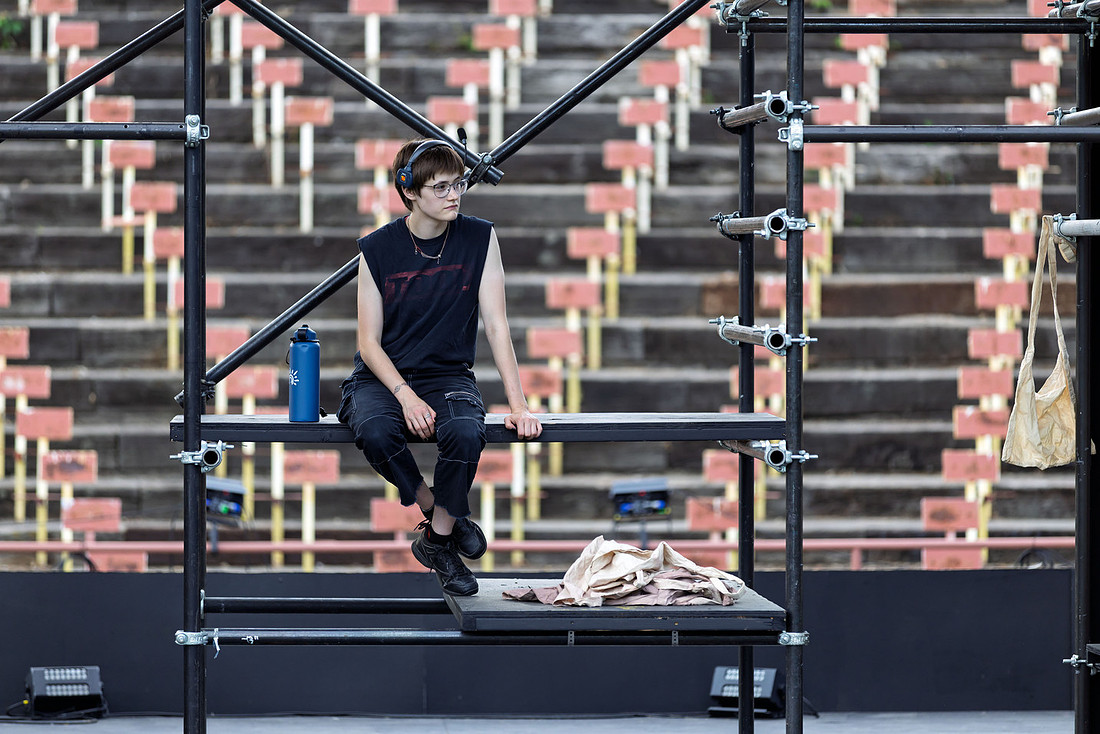
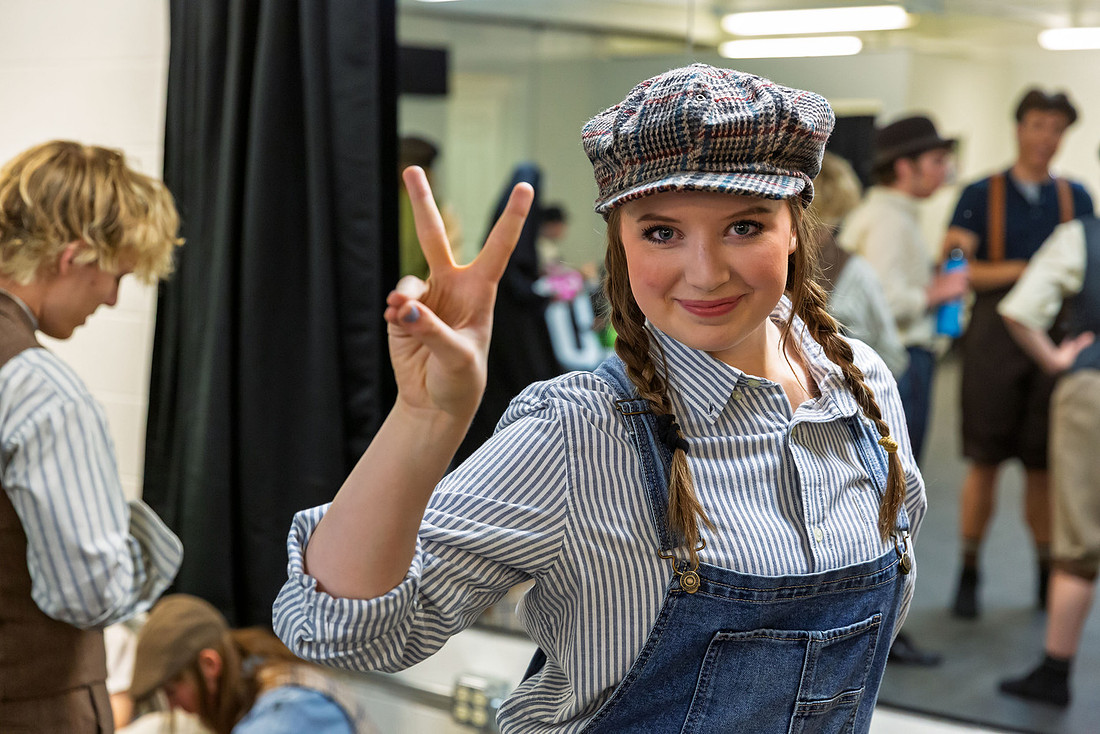
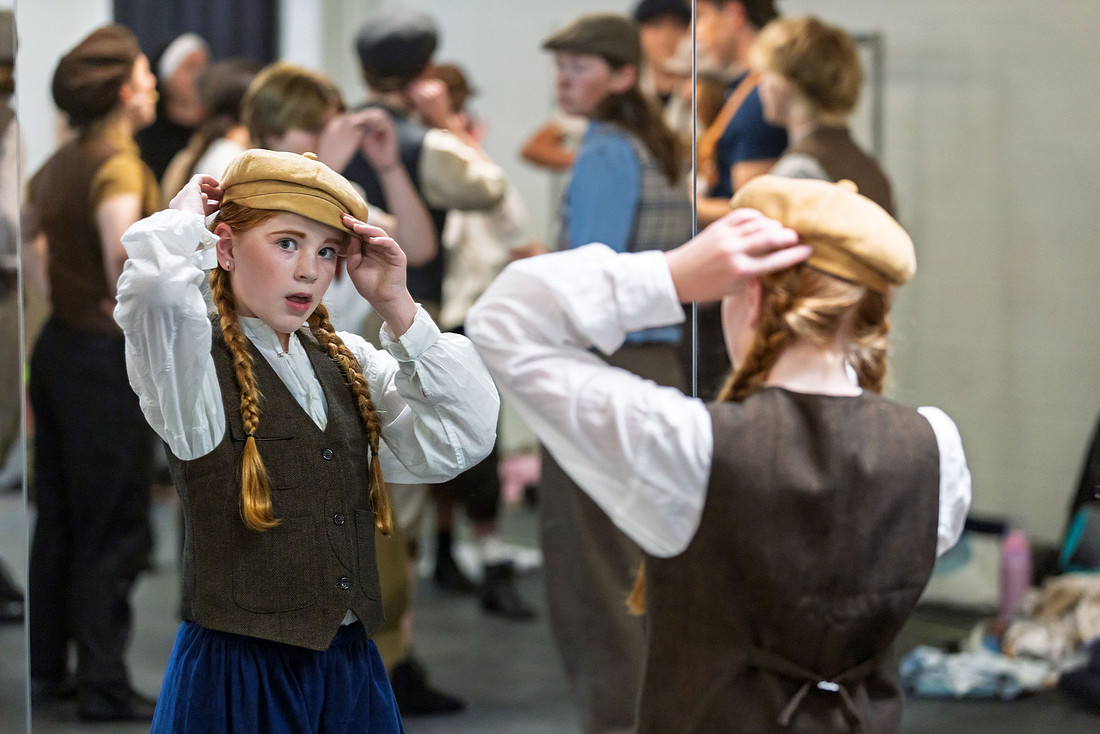
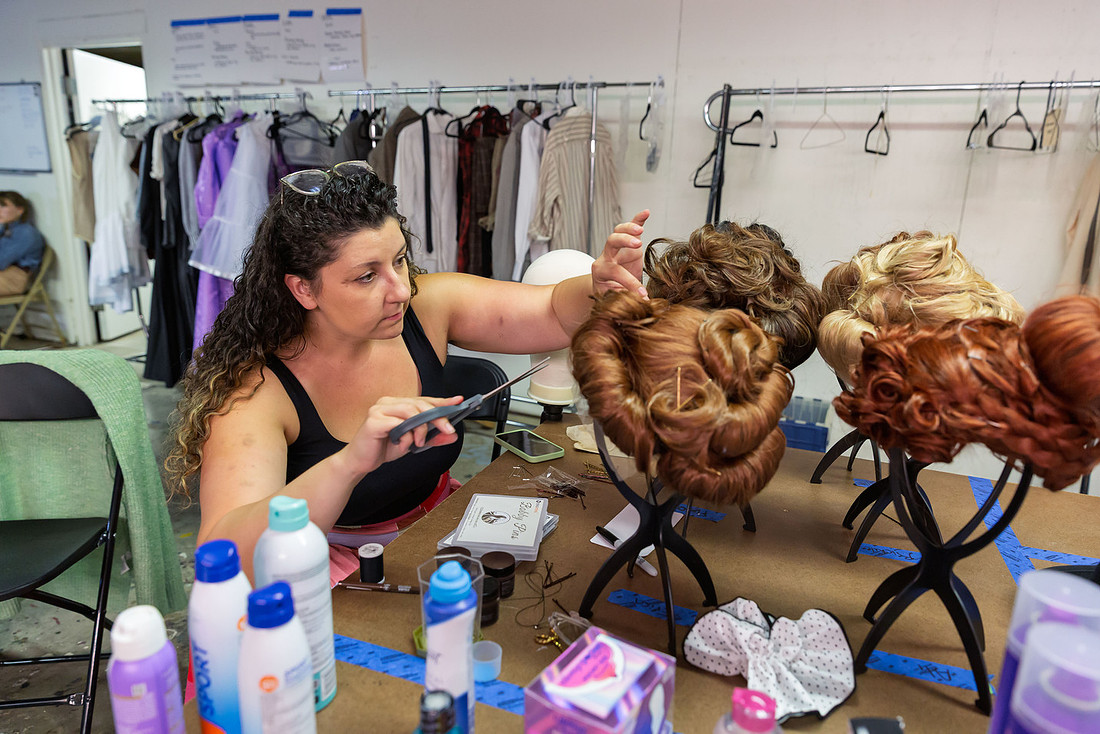
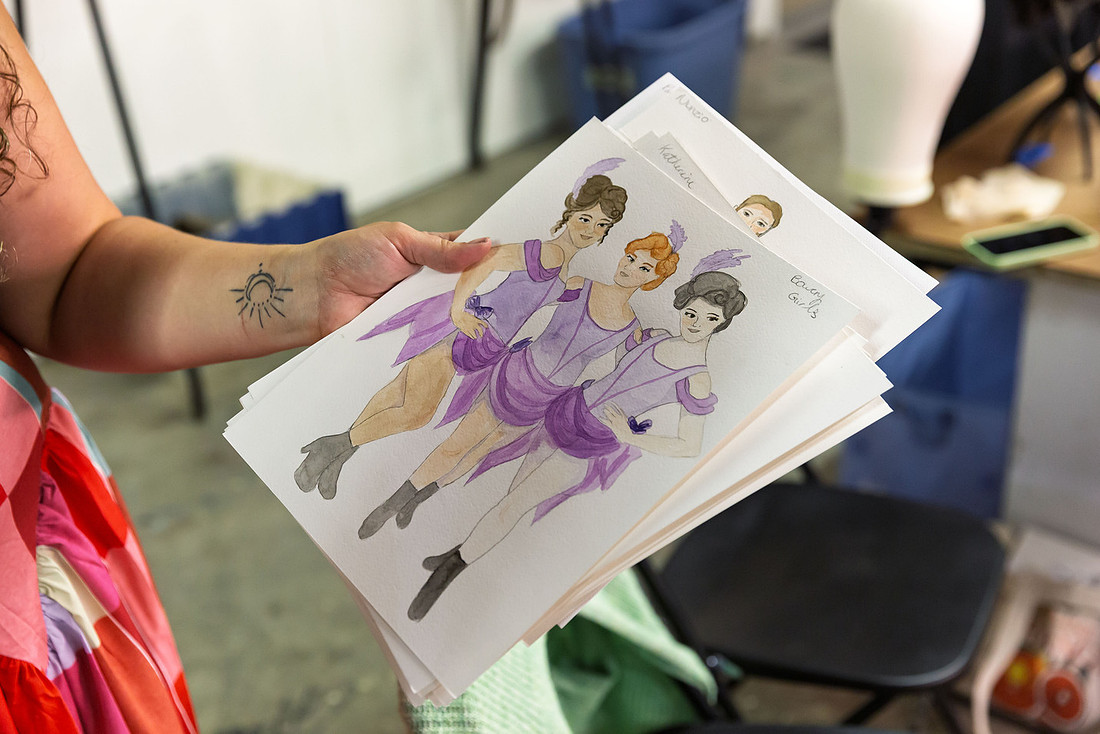
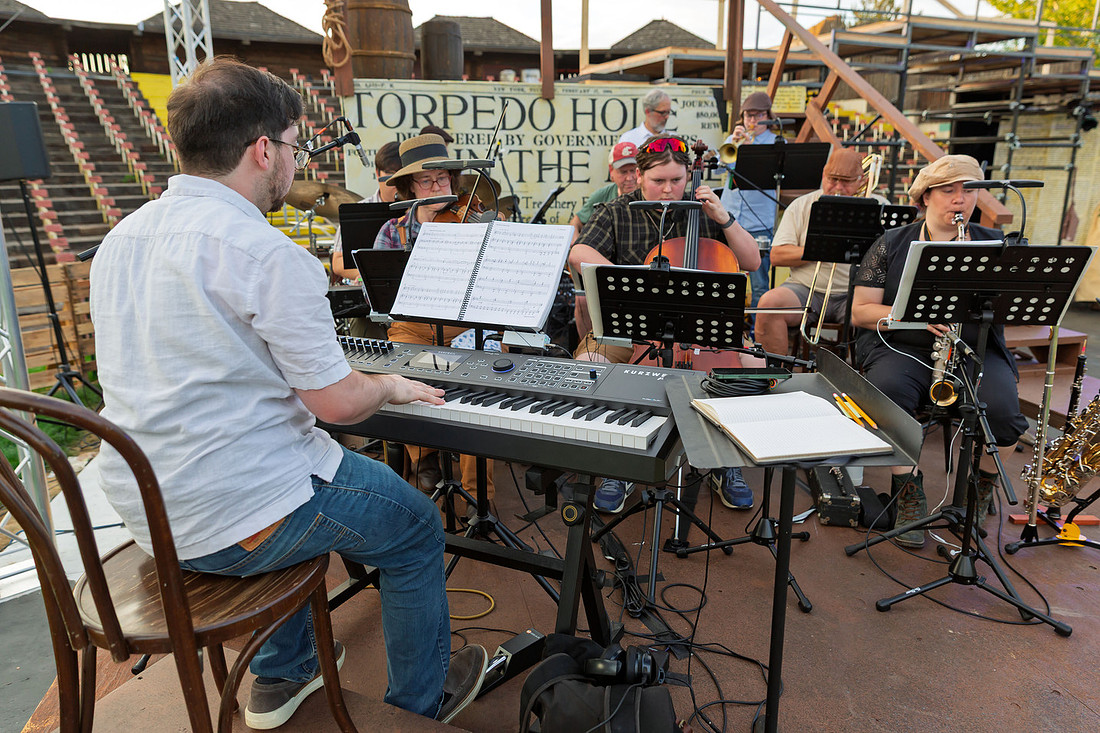
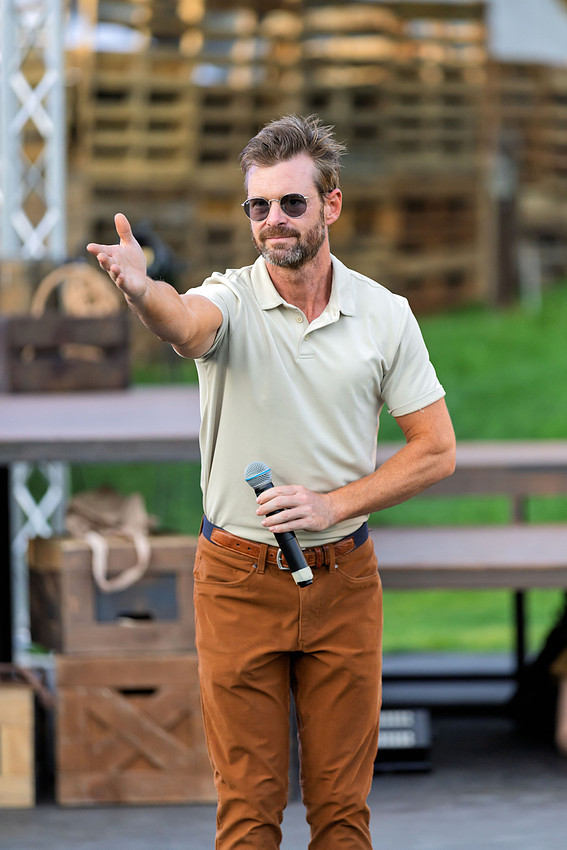
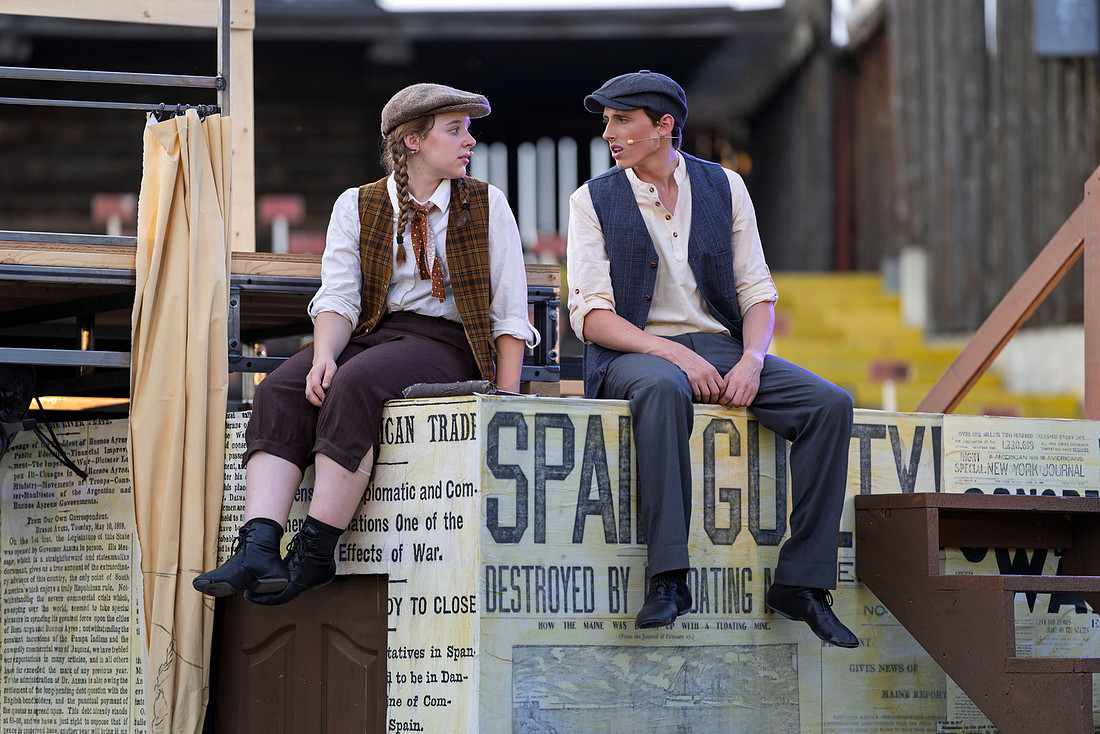
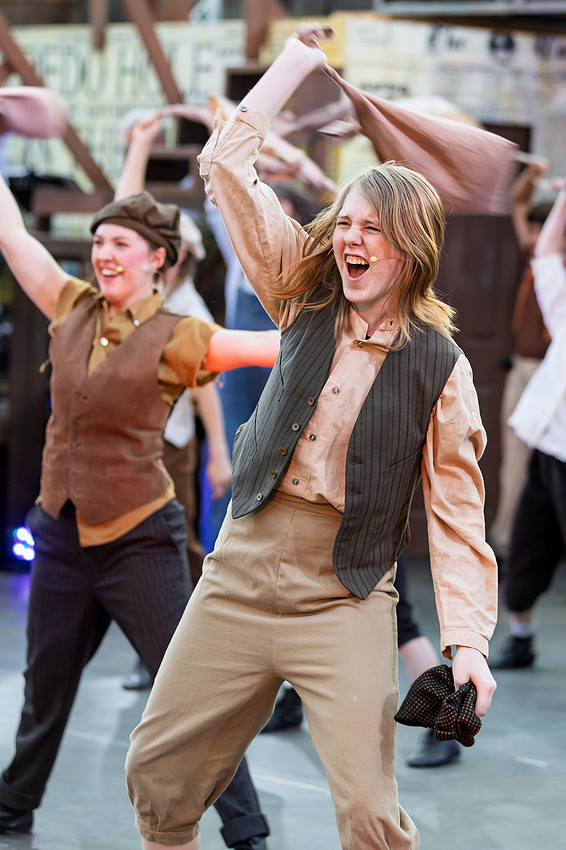
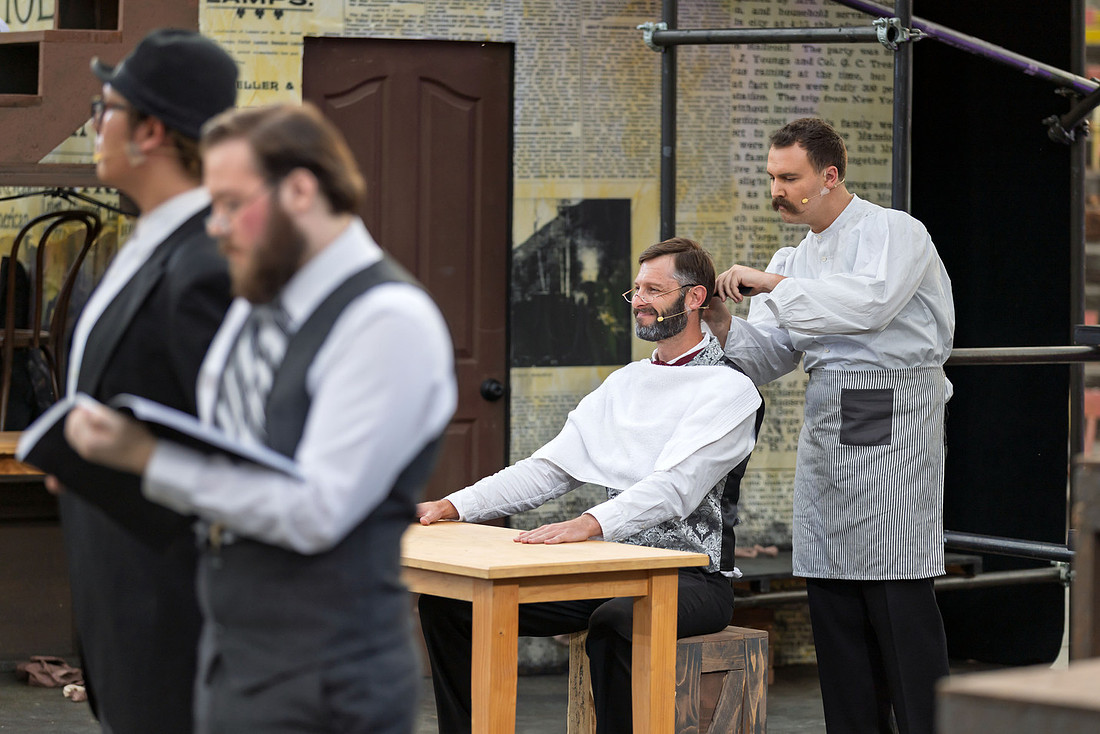
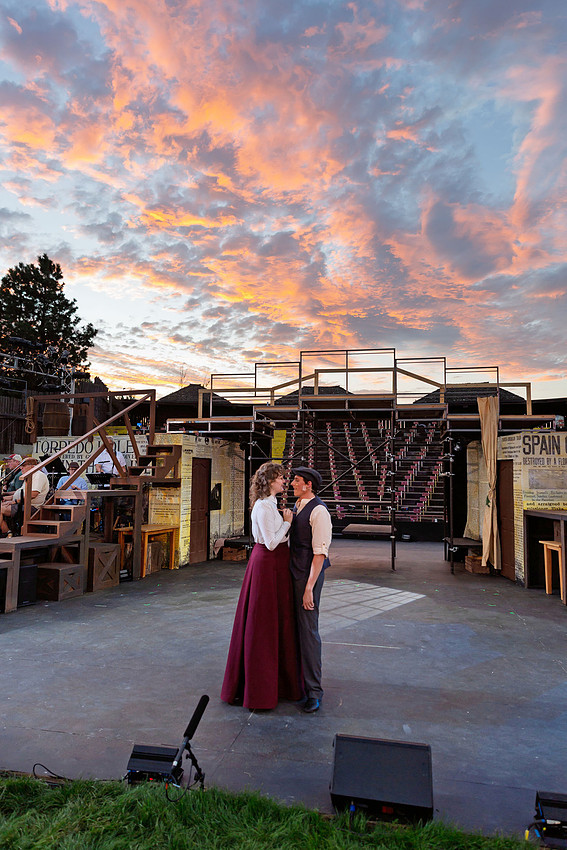
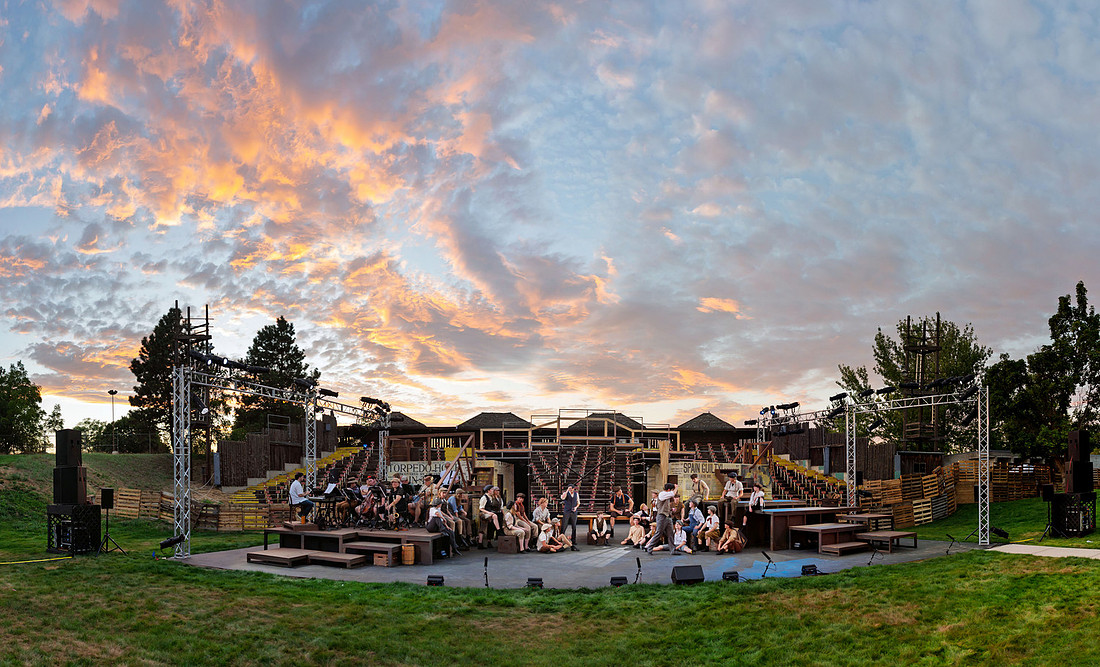
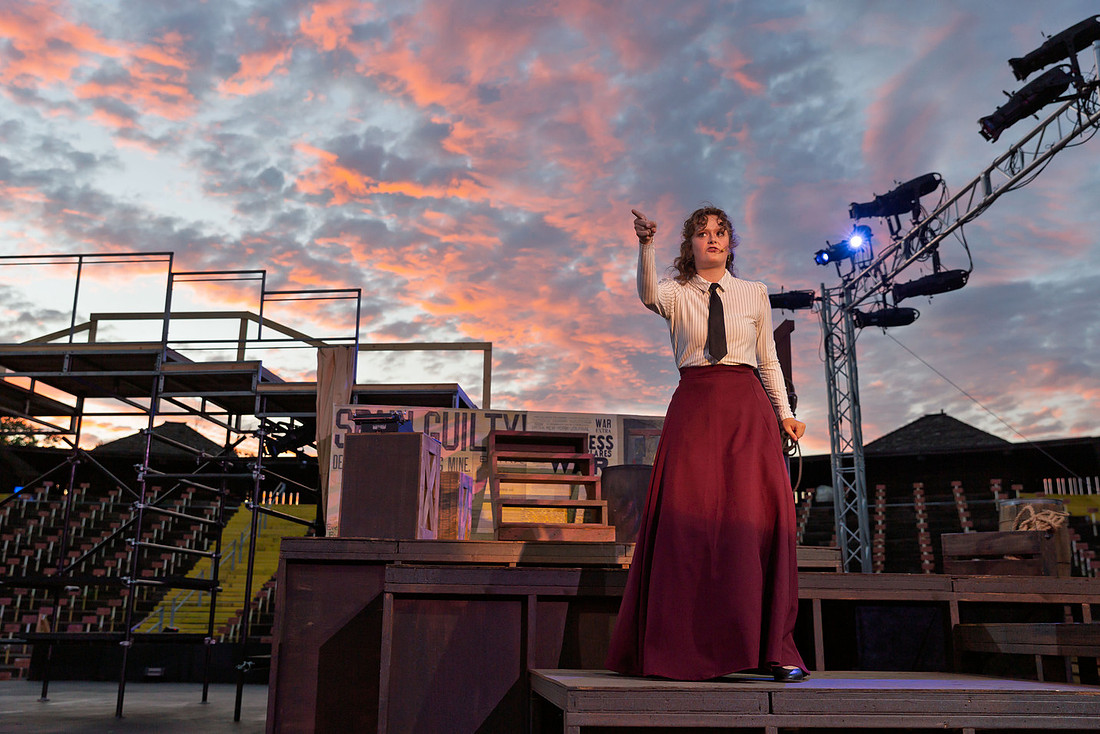
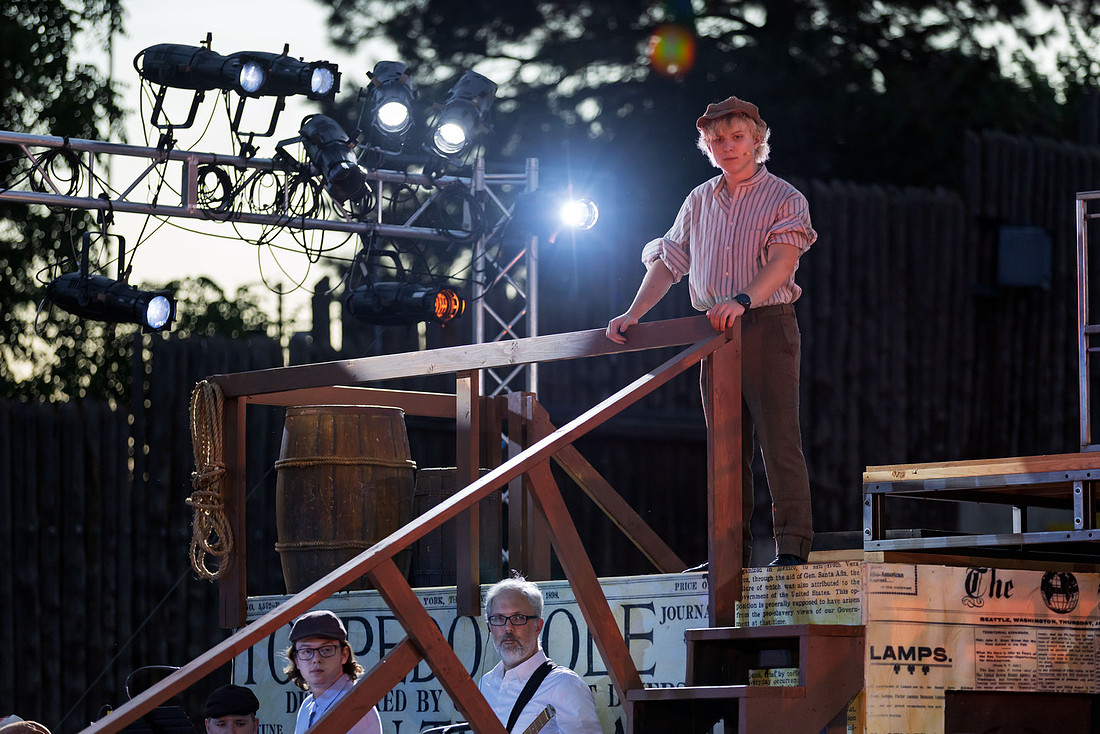
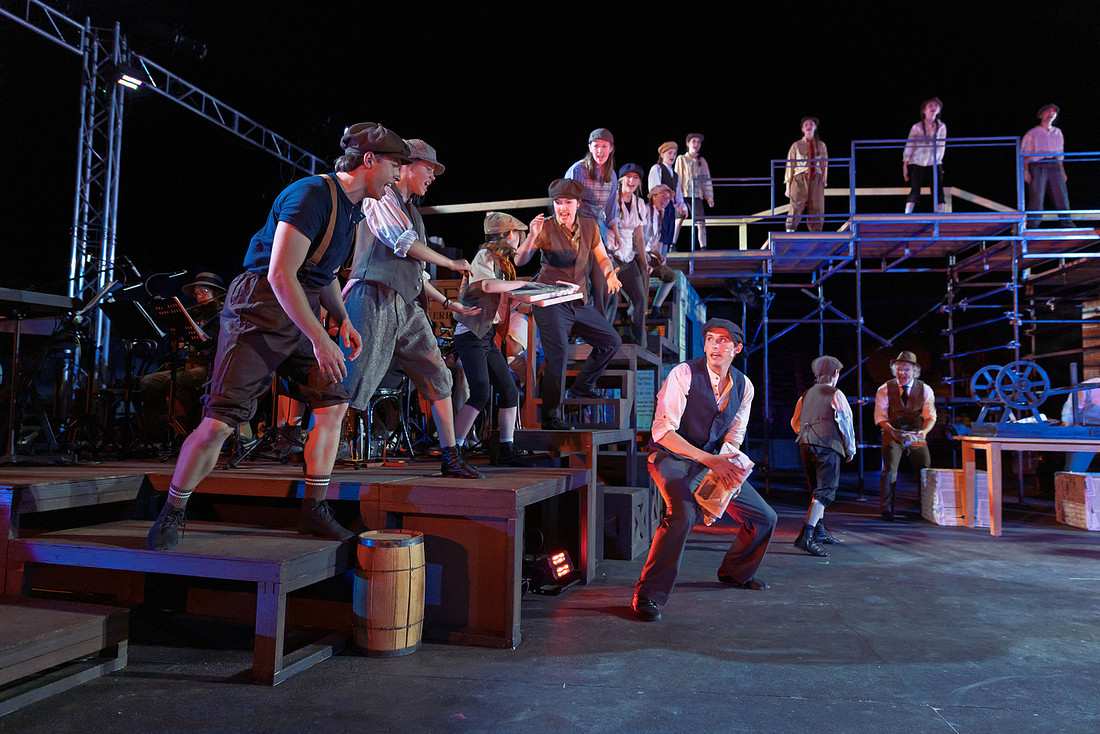
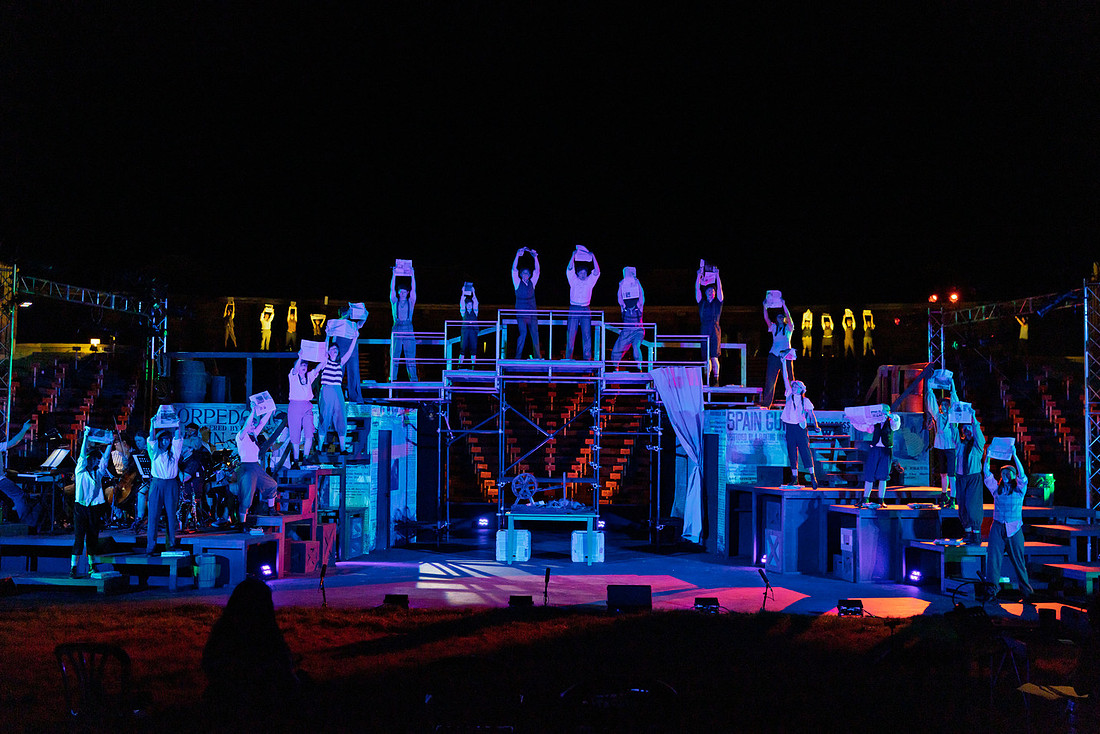
Inspired by the real-life Newsboys Strike of 1899, Disney’s Newsies follows a group of young newspaper sellers who organize against powerful publishers and fight for fair treatment. The musical combines a story about friendship, courage and collective action with music by Alan Menken, lyrics by Jack Feldman and a book by Harvey Fierstein.
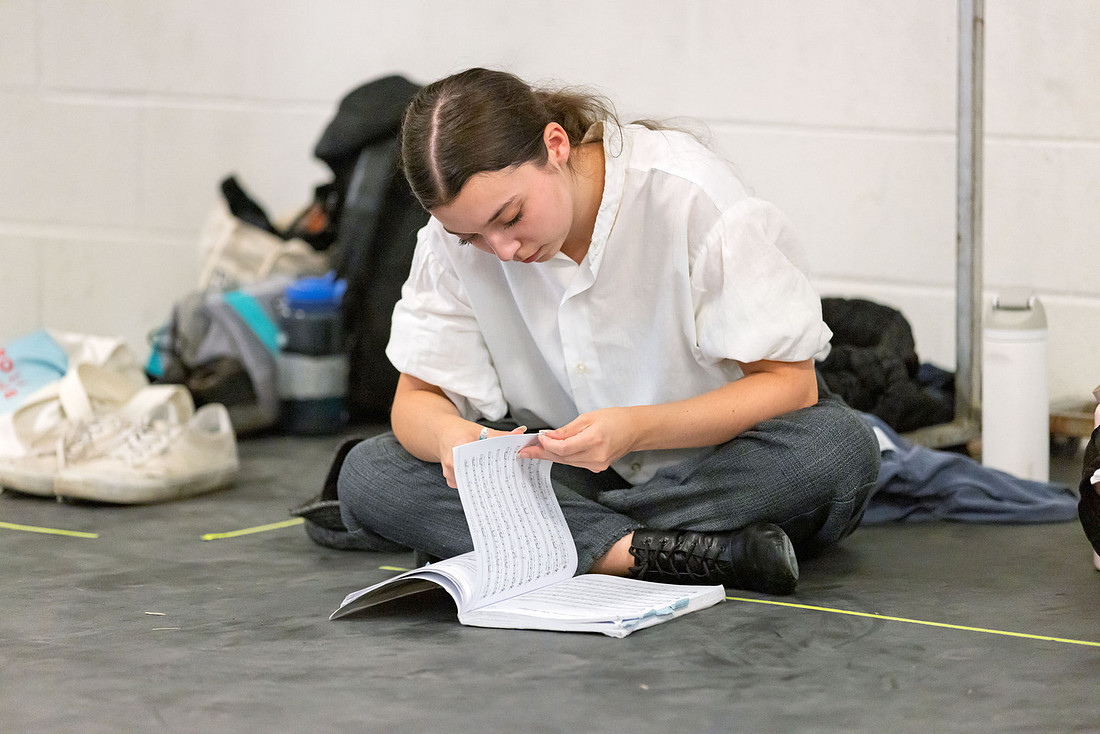
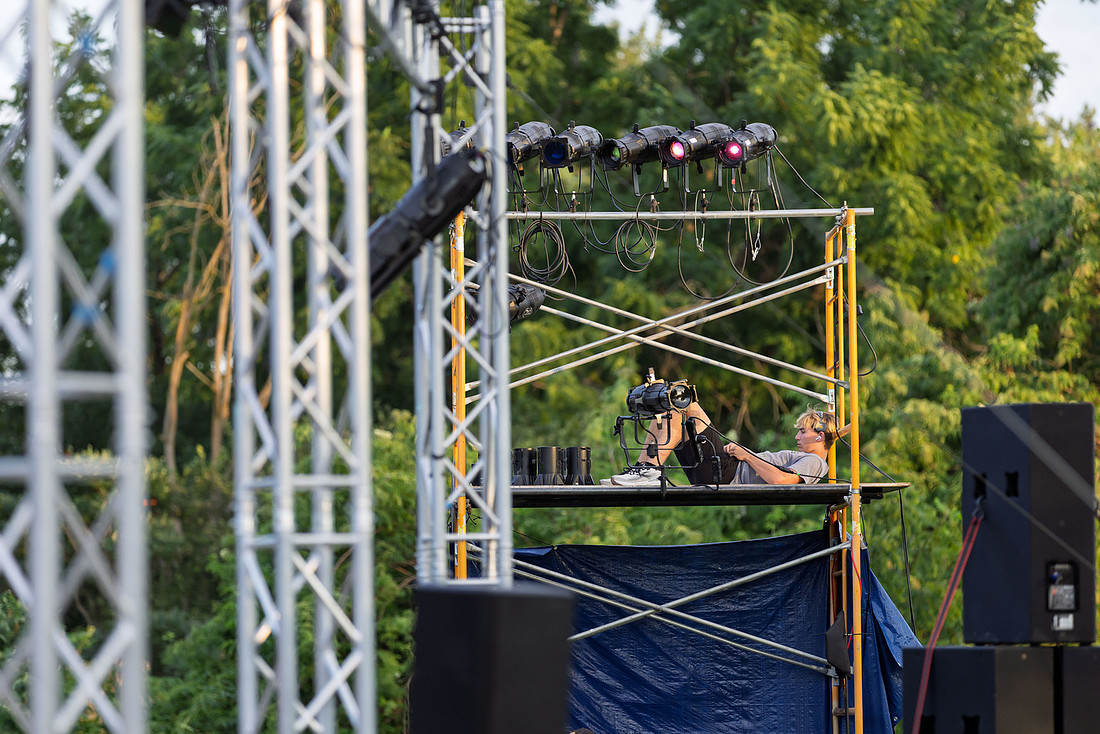
Walla Walla Summer Theater’s production is directed by Tyson Kaup, the organization’s executive artistic director. The creative leadership team also includes music director and conductor Mitchell Brownell and choreographer Brad Willcuts. The production reflects the work of a much larger group of performers, musicians, designers, technicians, volunteers and community supporters.
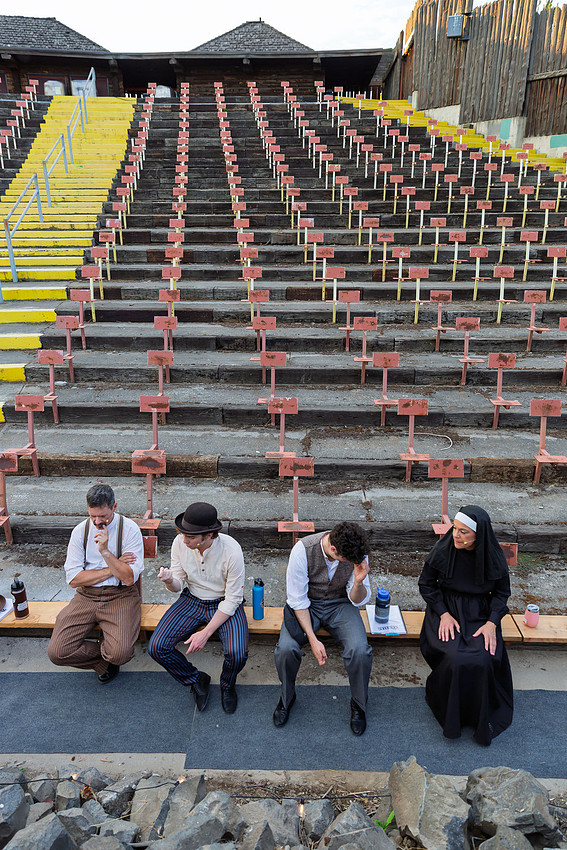
Performances are scheduled for July 17-19 and July 23-25, 2026, at the Fort Walla Walla Amphitheater. Tickets include general-admission lawn seating, reserved chairs and VIP reserved seating. Because this is an outdoor production, guests should review the theater’s current seating, accessibility and weather information before attending.
Walla Walla Summer Theater is a nonprofit organization with a mission to transform the Fort Walla Walla Amphitheater into a nationally recognized regional theater while strengthening Walla Walla’s cultural identity through locally produced performances and accessible educational opportunities. The organization envisions an ongoing summer theater company that creates opportunities for local youth, performers, musicians, technicians and visiting artists.
Learn more about the 2026 season and Newsies, purchase tickets or support the amphitheater and theater programs with a donation.
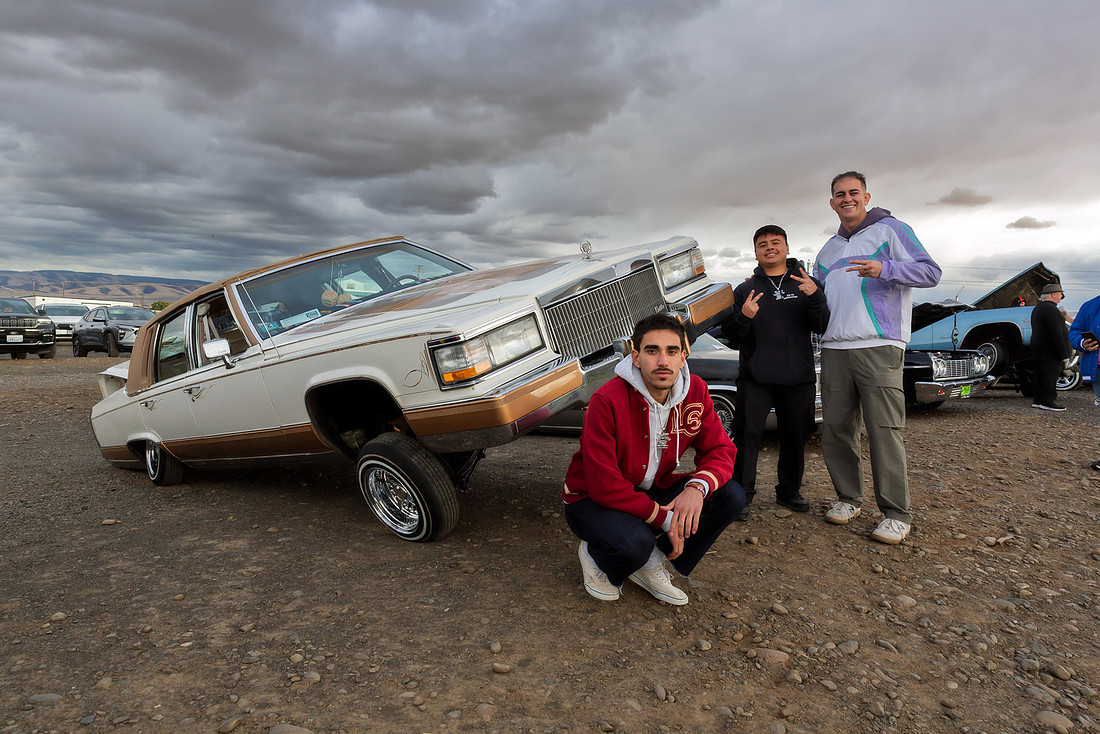
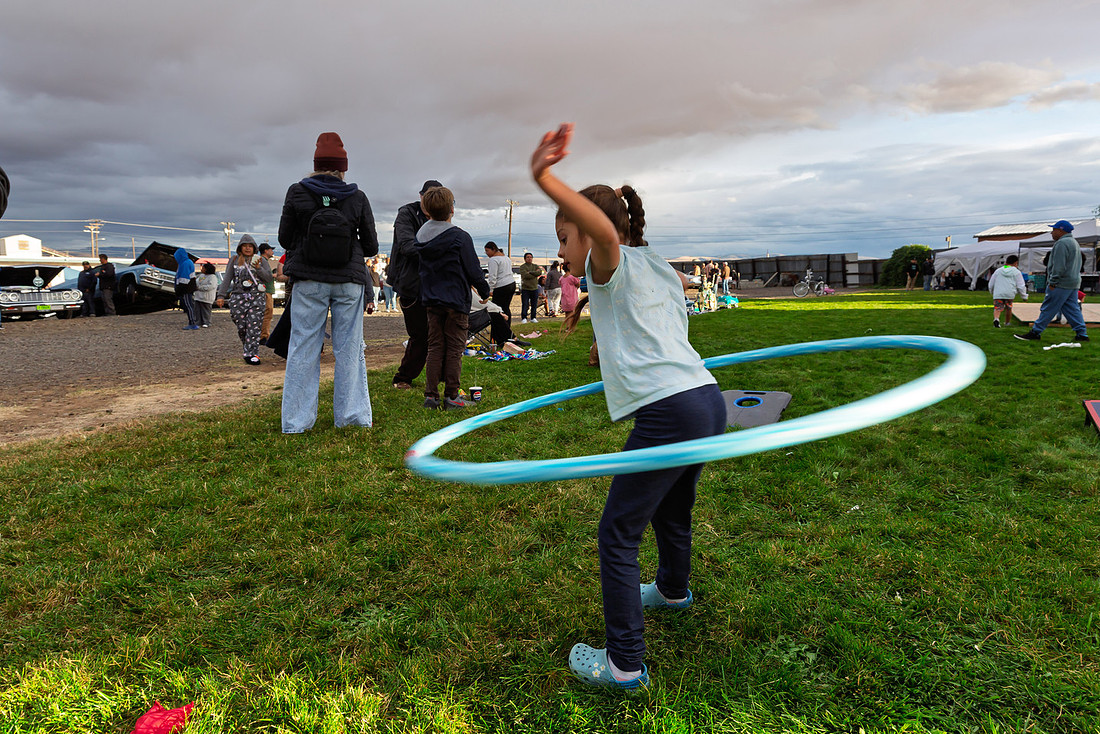
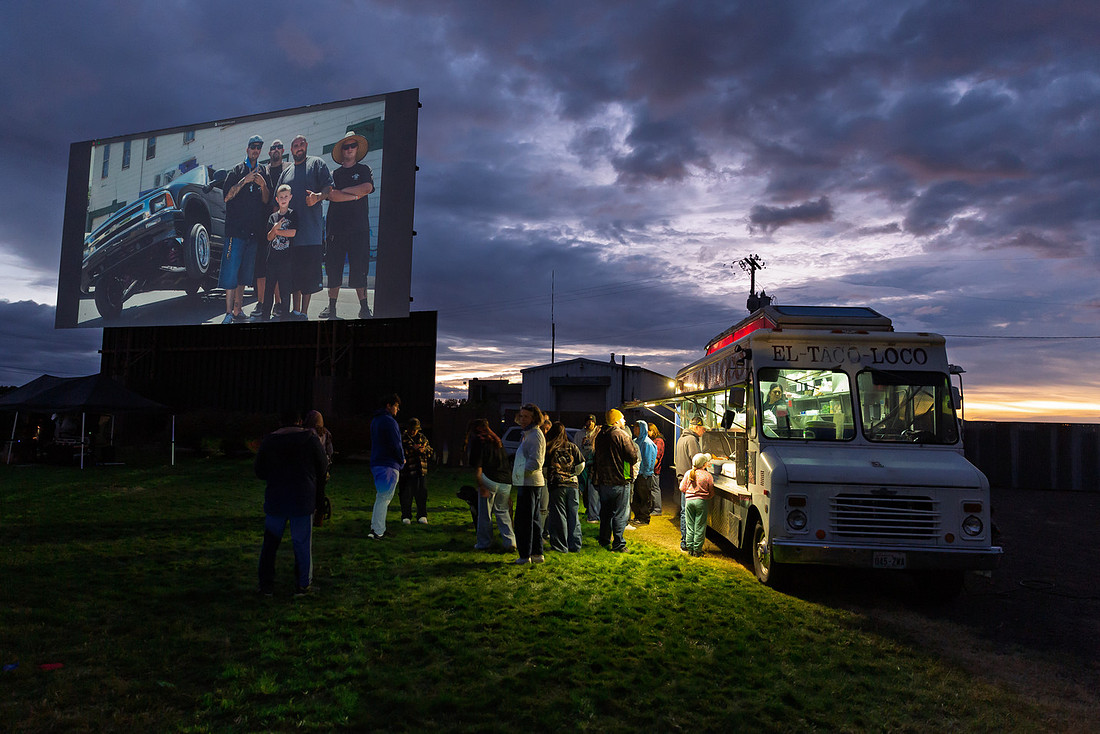
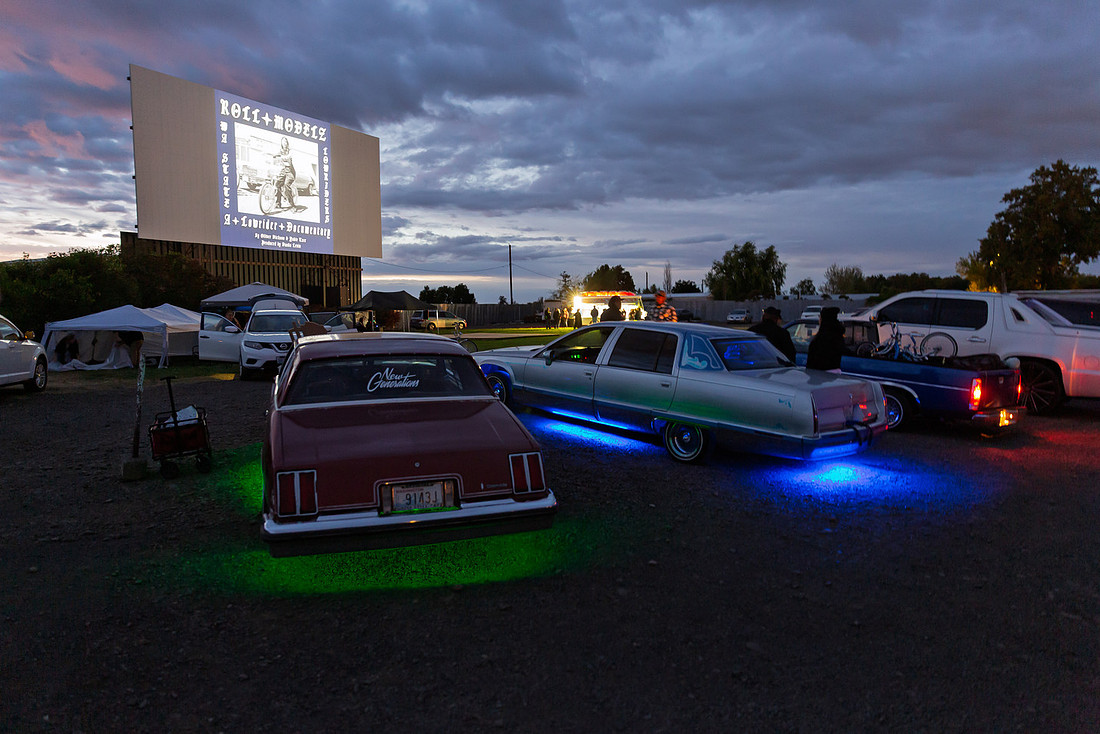
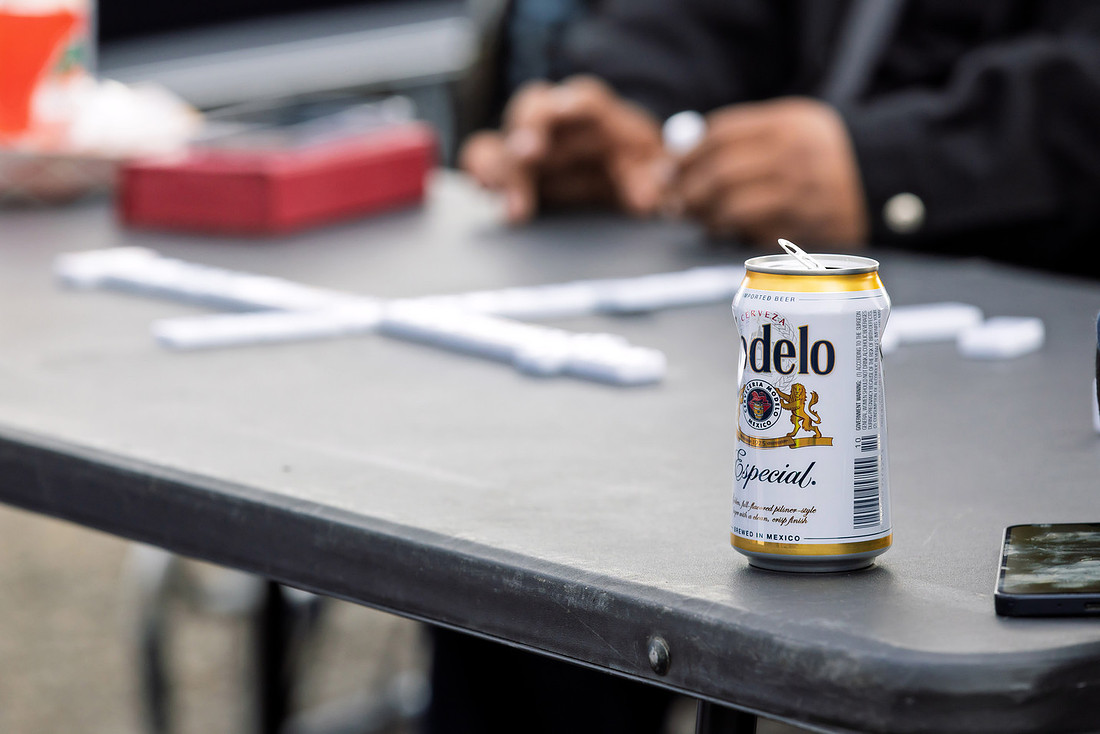
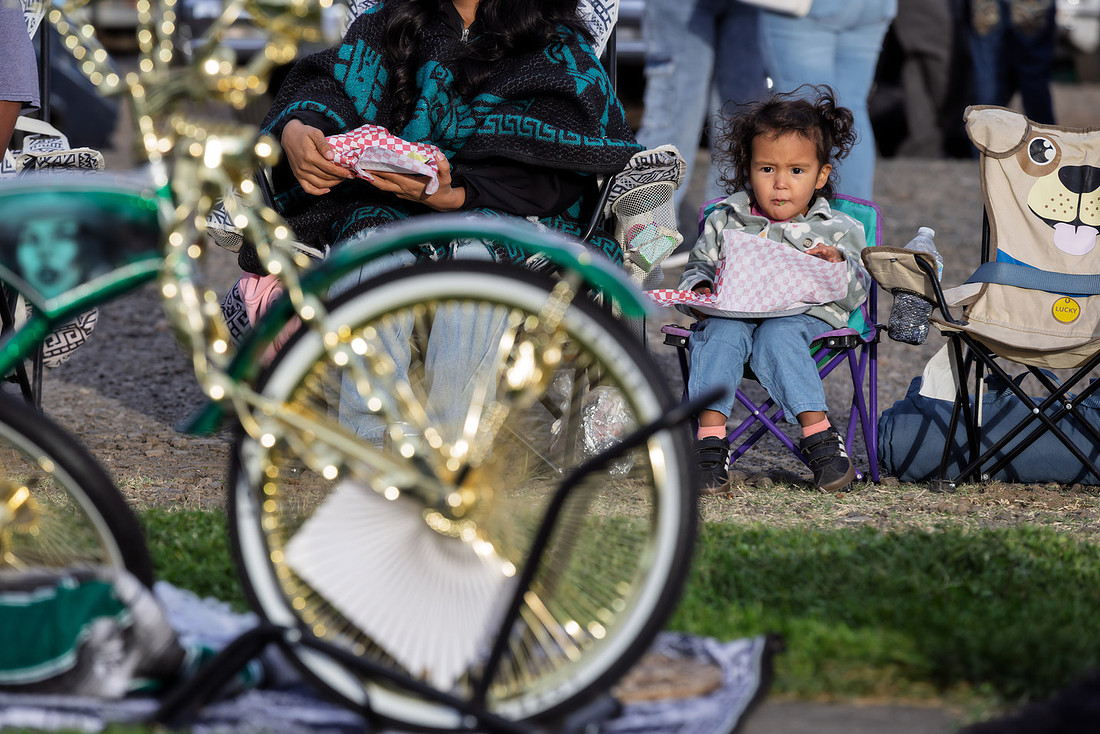
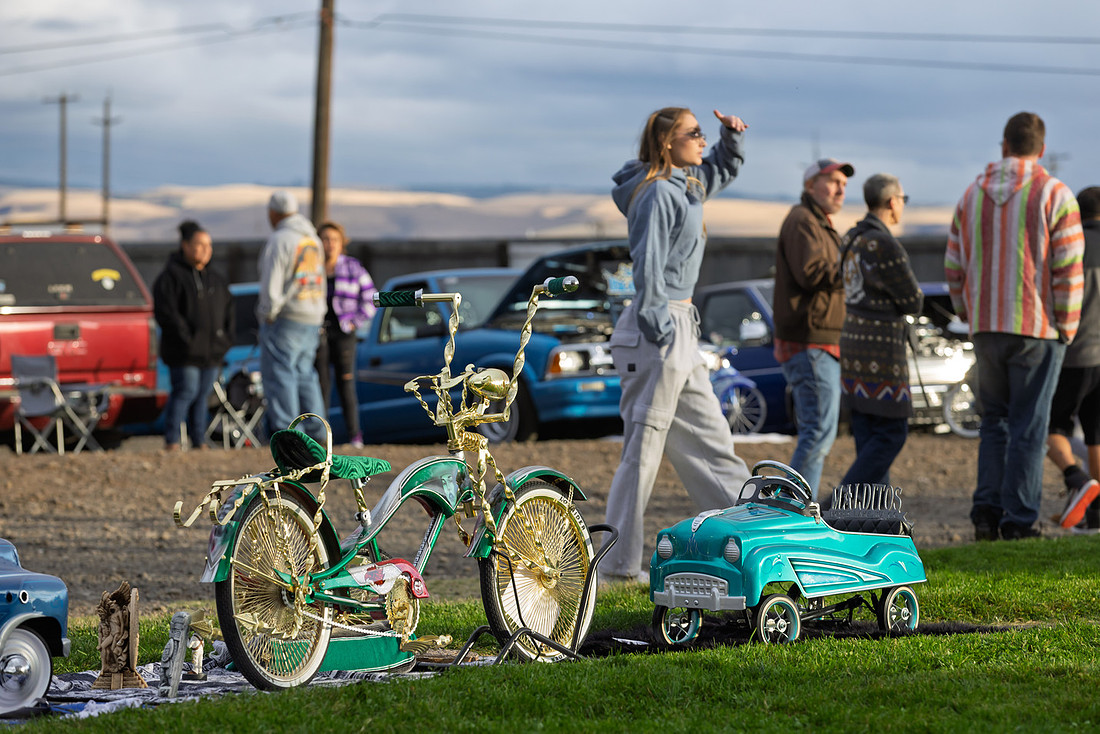
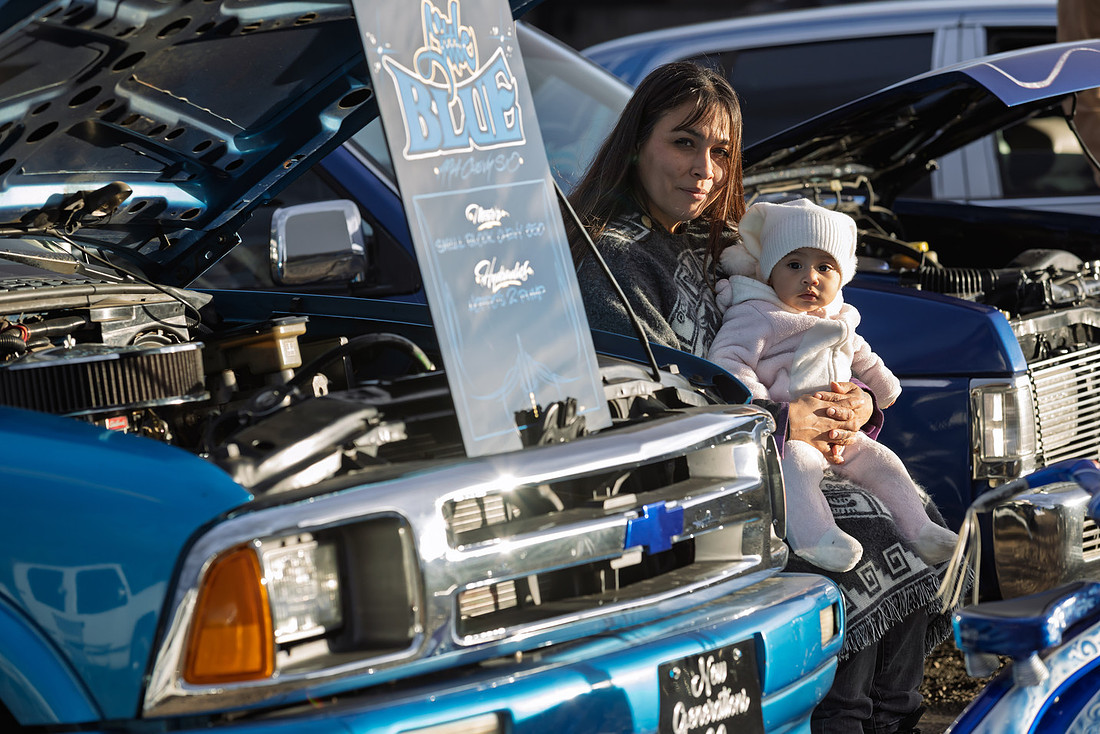
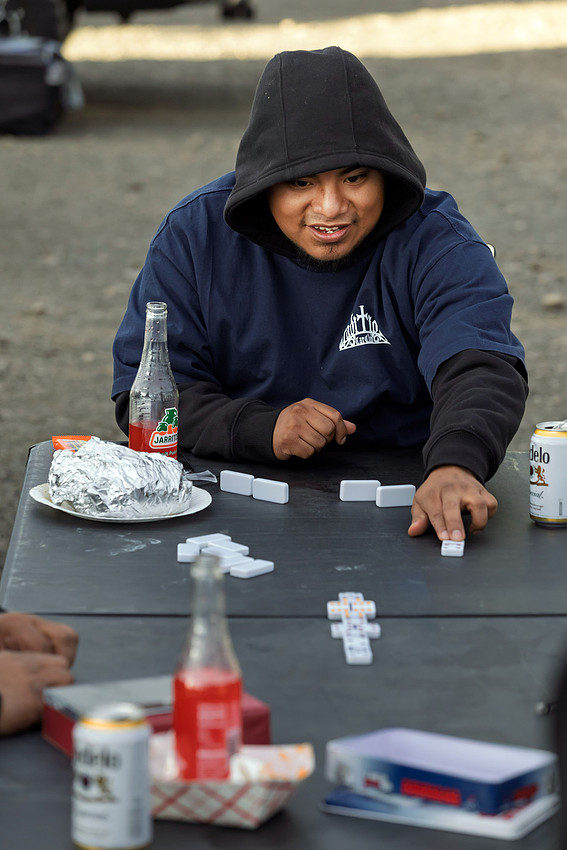
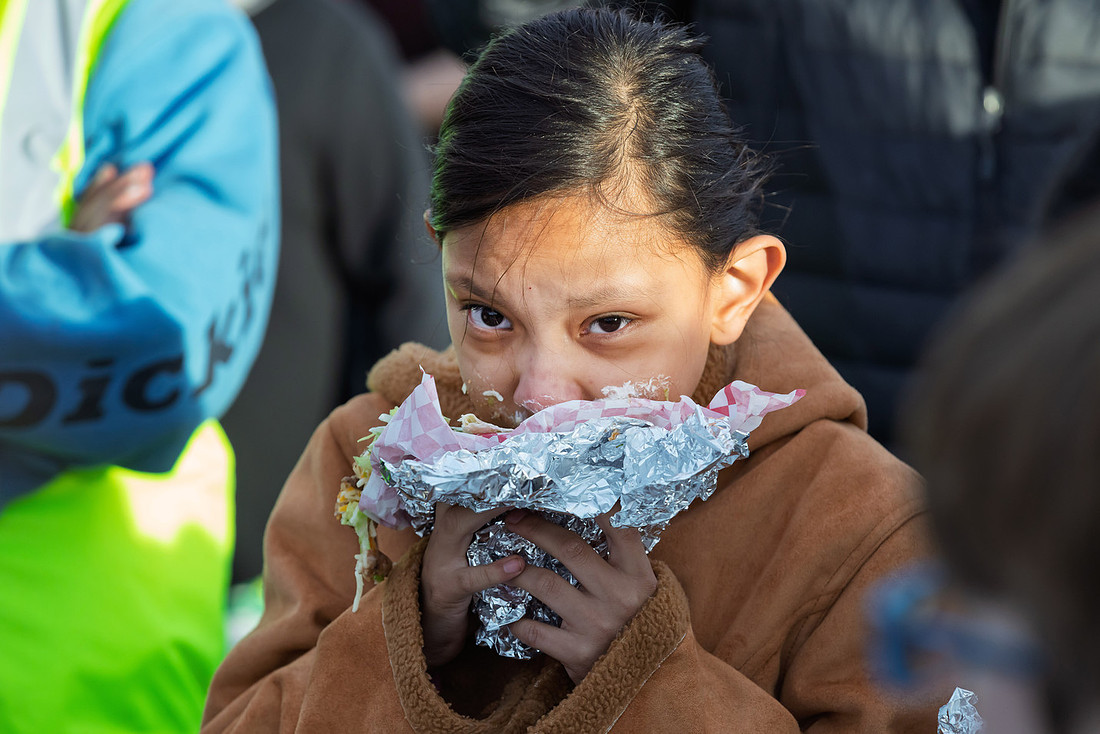
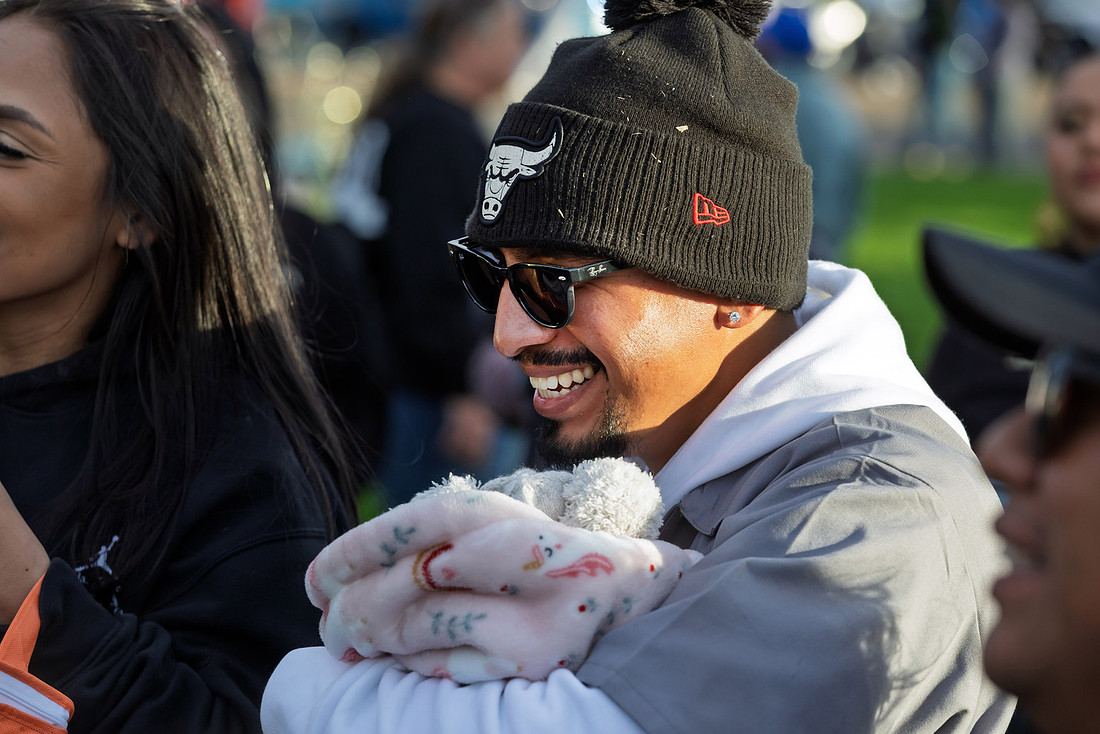
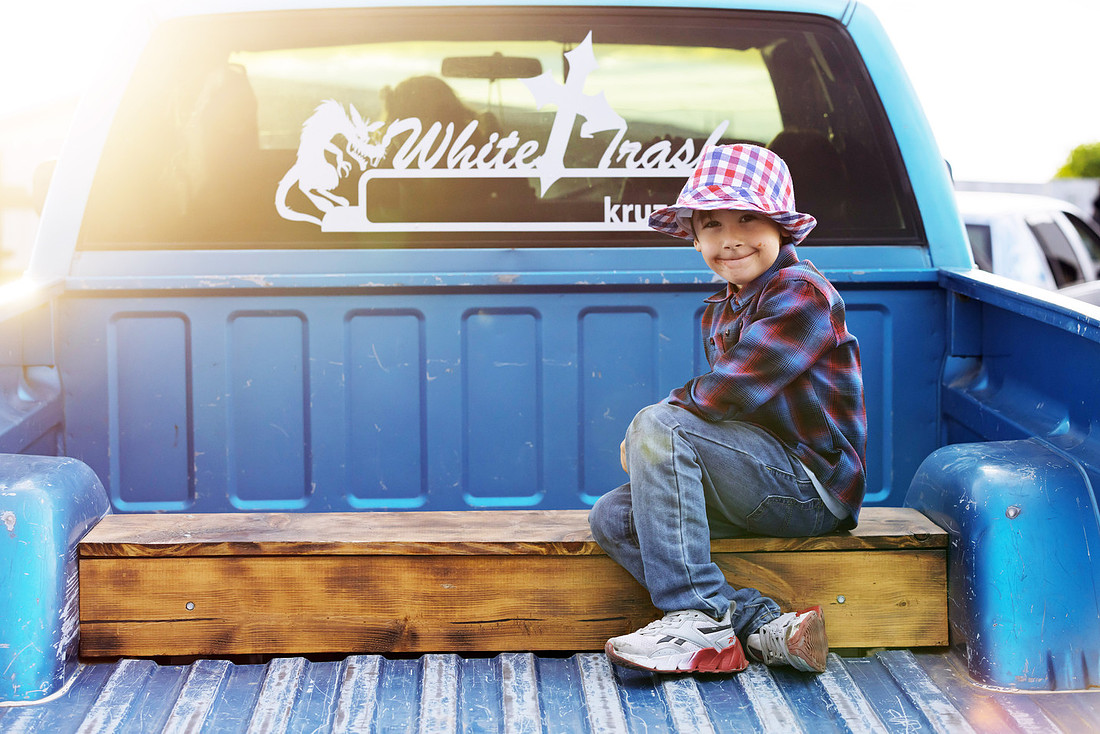
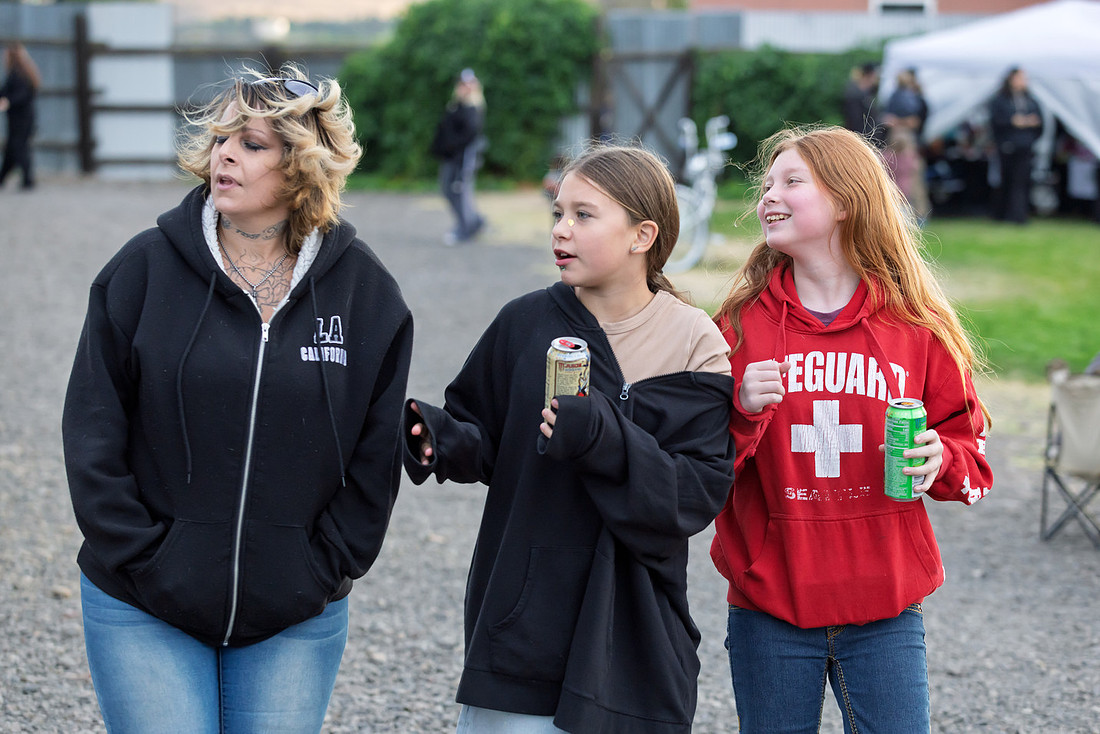
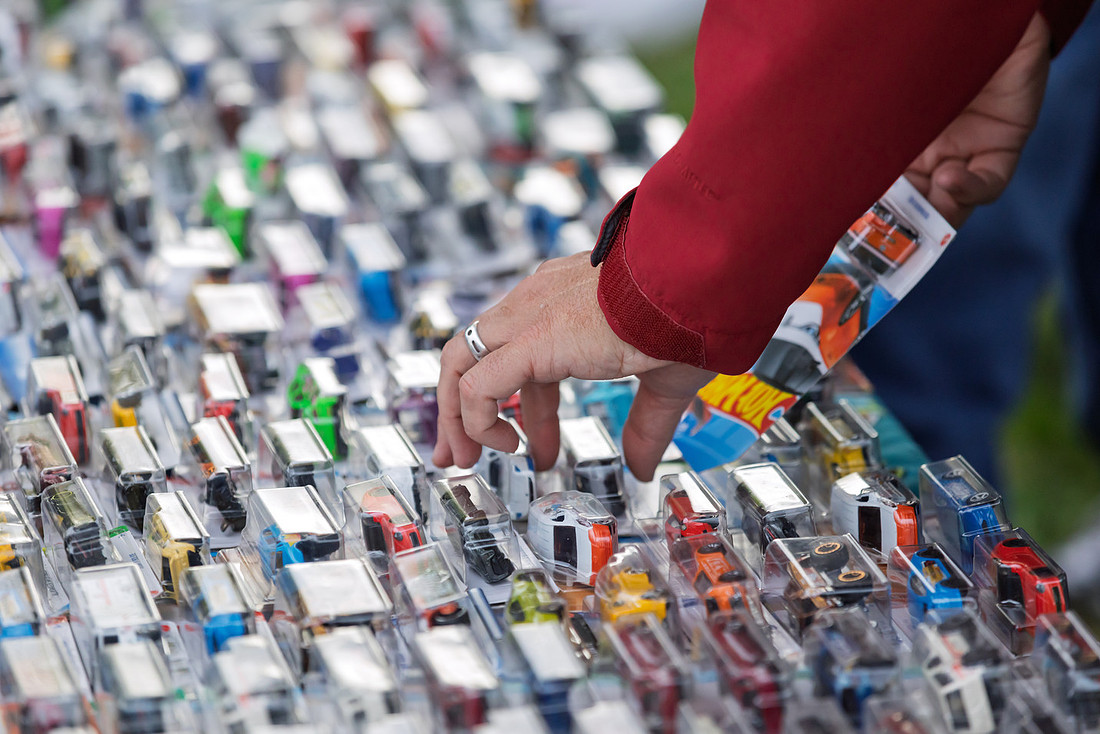
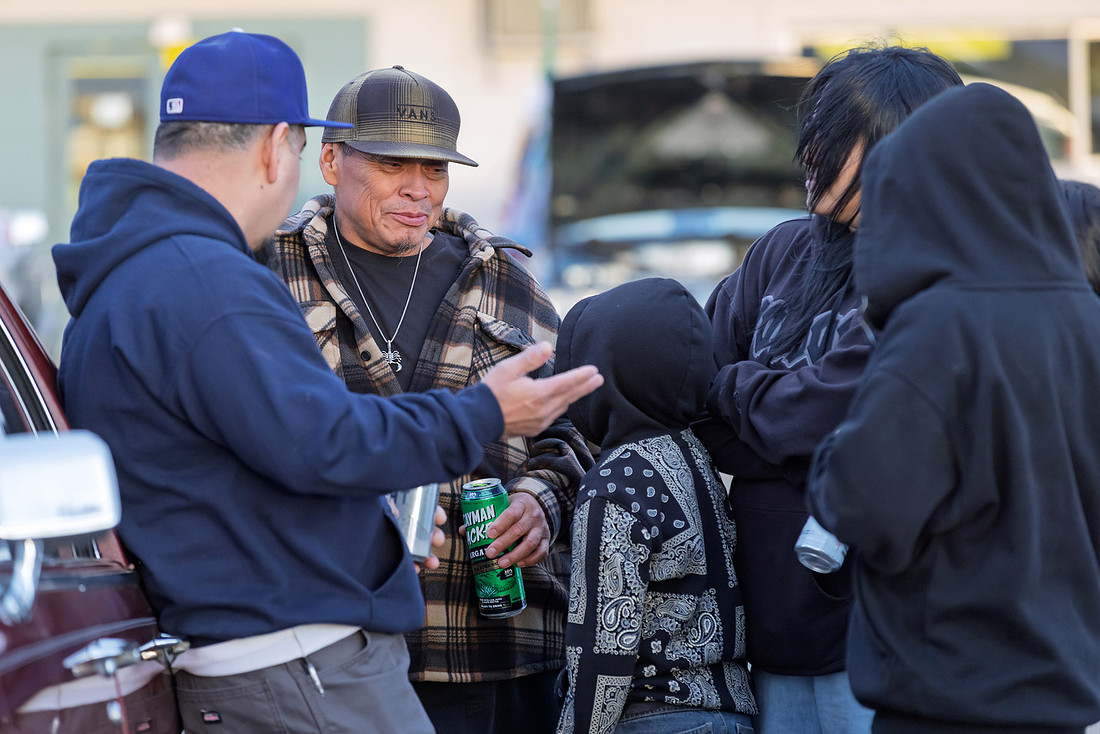
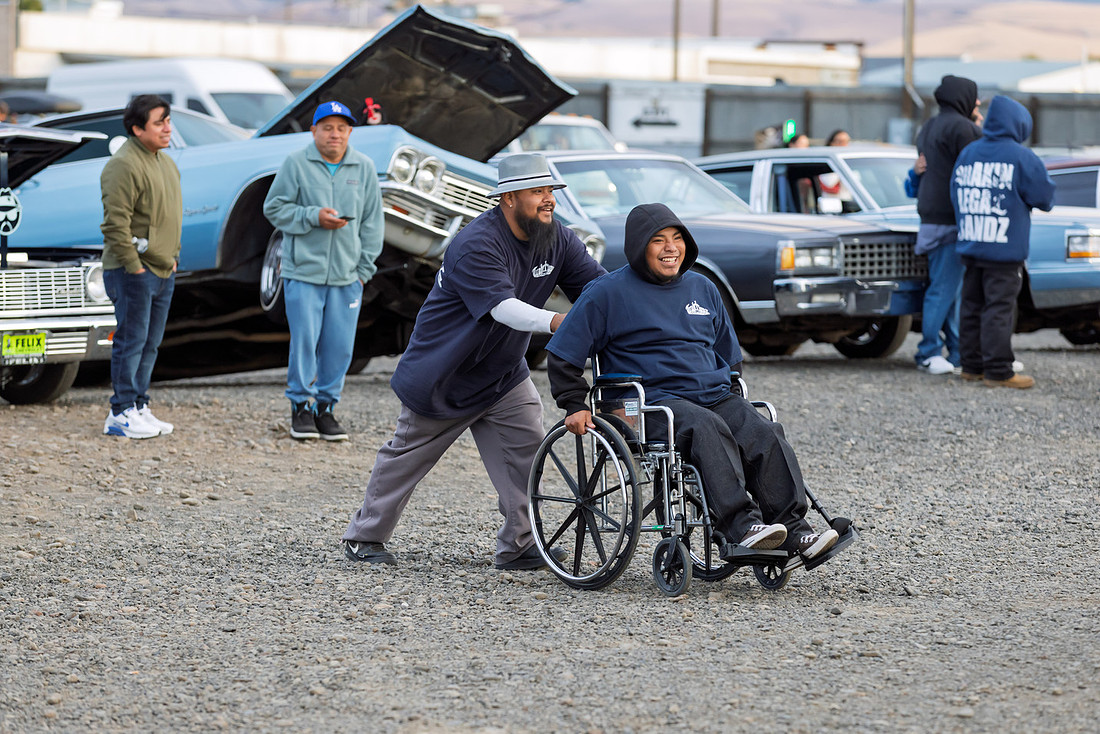
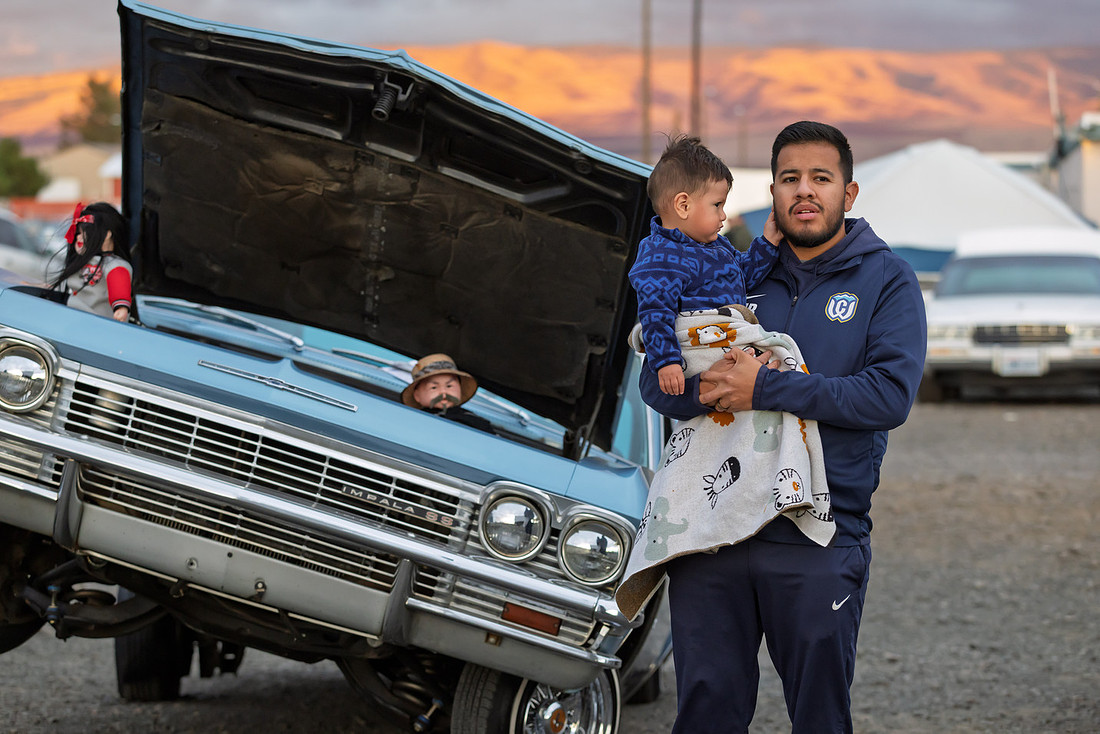
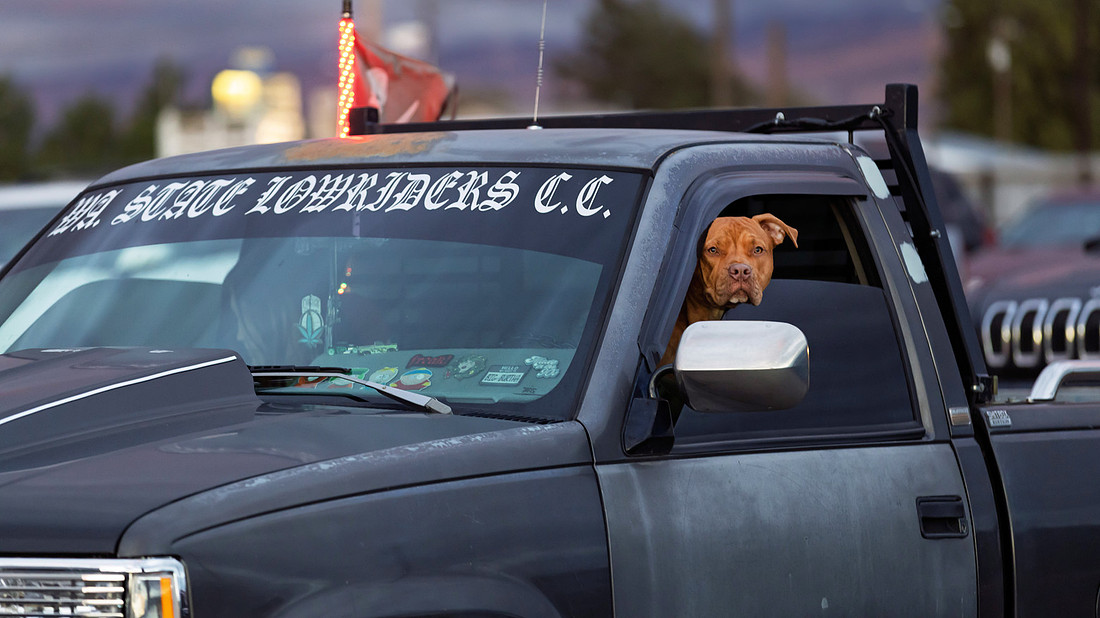
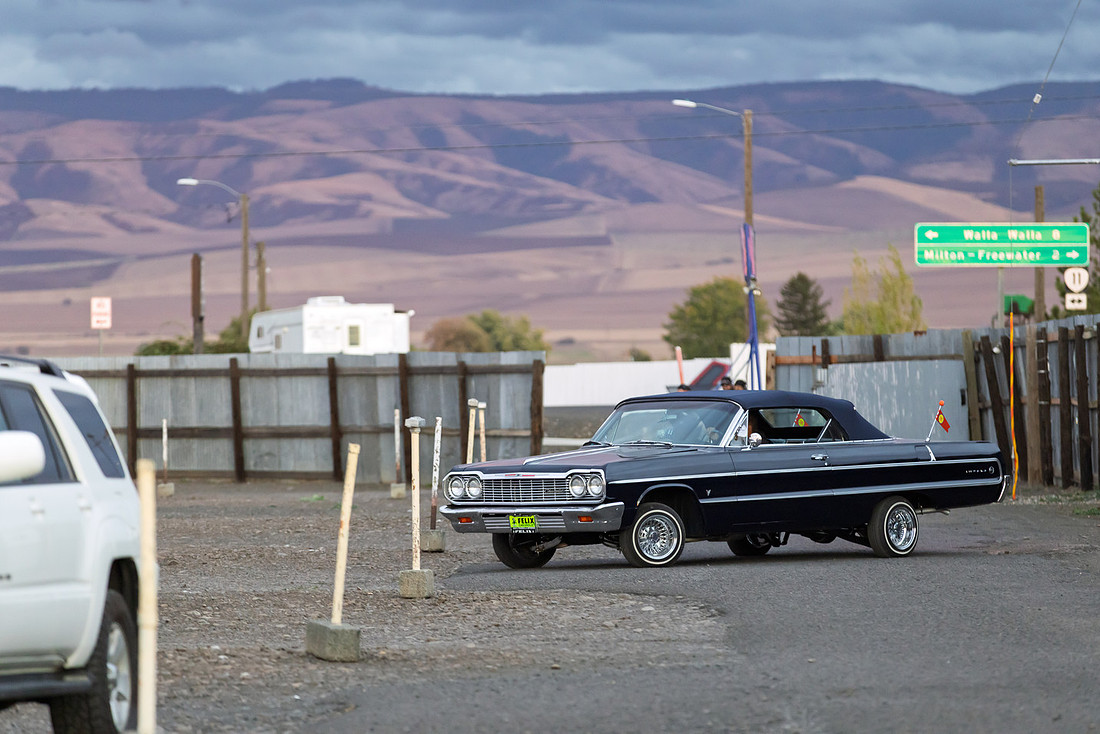
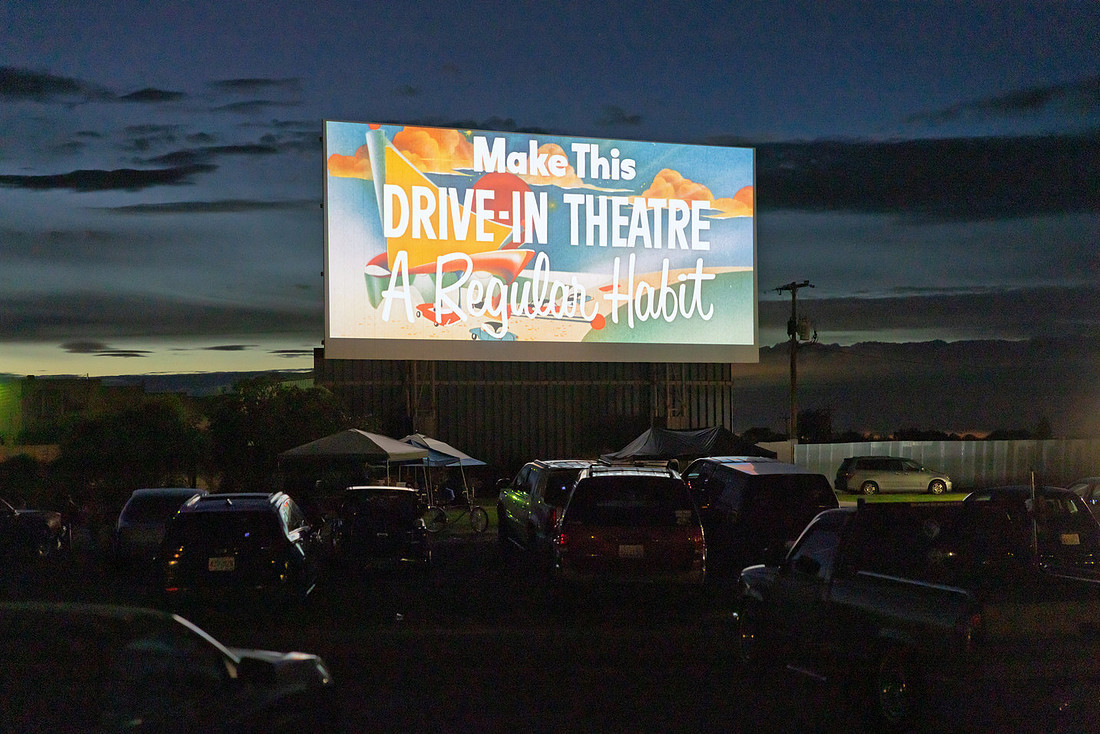
On Saturday, October 11 at the M‑F Drive‑In Theater near Walla Walla, the community gathered for the premiere of the documentary Roll Modelz — a powerful exploration of lowrider culture and Chicano identity in Eastern Washington. At the heart of this project is filmmaker-photographer Yahir Tzec-Carrasco, a 2025 graduate of Whitman College.
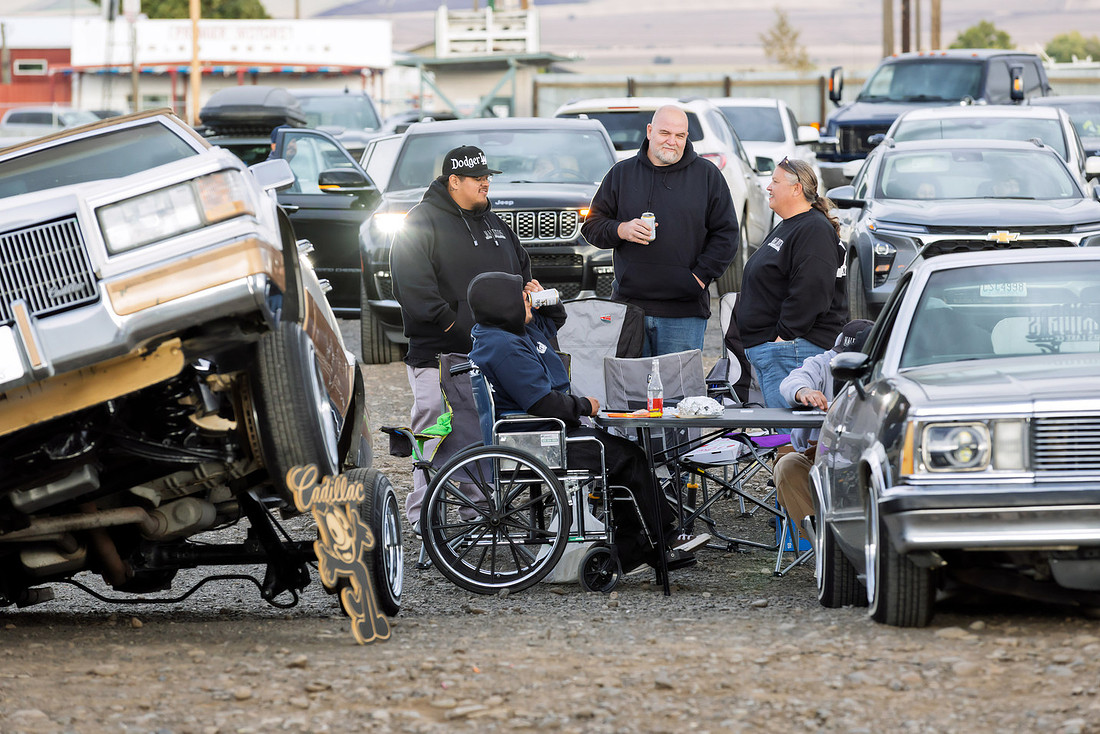
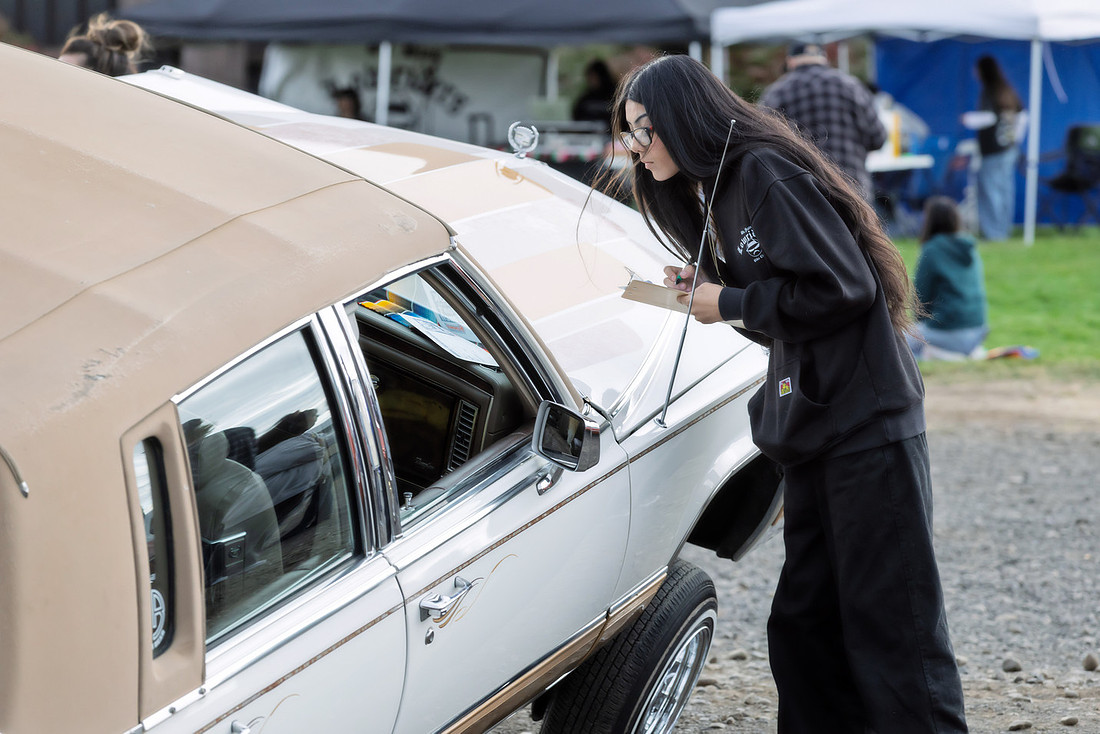
Yahir led the effort alongside teammate Oliver Rodriguez Dickson (also Whitman ’25), joining local lowrider club members to craft a story grounded in community, resilience and art. My lens captured the evening’s energy — from the gleaming custom cars and the gathering of supporters, to the moment the screen lit up and the narrative rolled into view.
Flip through the album below to experience the night: the cars, the crowd, the filmscreen glow — and the collaborative vision of Yahir, Oliver and their Whitman College team, made real in the Walla Walla region.


Below are the few shots I got during the event. I had no idea it would turn into this. I was actually in bed, ready to sleep, and did one last check of aurora activity. After seeing the activity was so high, I dragged myself back outside thinking it would be a dud.
Next time, I would choose a spot with something in the foreground for scale. But I might have to make a trip to the far north for a next time.
These shots show a vibrant and brightly colored aurora. In person it was muted colors. A long exposure photograph can show more detail than the human eye can see. These are not heavily manipulated, but they do not accurately reflect what it was like in person.


In a yearlong project with Visit Walla Walla, I photographed a variety of iconic Walla Walla Valley events for the purpose of illustrating the 2024 Walla Walla Visitor Guide (along with other photographers). Below are highlights from this project.

A Walla Walla Valley Academy student volunteers at the 2023 Walla Walla Balloon Stampede, helping inflate the balloon I was invited to ride along in.

A birds-eye view of Howard-Tietan Park, where the 2023 Walla Walla Balloon Stampede was held.

The Washington State Penitentiary Color Guard leads the parade for the 2023 Waitsburg Days Parade.

Community members line Main Street for the 2023 Waitsburg Days Parade.

The Walla Walla Fair & Frontier Days wagon at the 2023 Waitsburg Days Parade.

Tourism leaders from around Washington State meet at the Ford Motor Co in Walla Walla.

Visit Walla Walla Executive Director Guy Glaeser addresses an audience of state tourism leaders.

State tourism leaders toured the Walawála Plaza, enjoying treats from Bright's Candies food truck.

An entrance to the Ford Motor Co.

Young community members enjoy a warm summer evening watching a show at Movies in the Park in College Place.

The inflatable movie screen at Movies in the Park in College Place.

Some of the exciting action at Pioneer Posse Days in Milton-Freewater.

The rodeo at Pioneer Posse Days.

Fans enjoying the rodeo in Milton-Freewater.

Shanks Pony puts on a great show after the rodeo is over.

A vendor at the College Place Farmers Market offers blueberries to a young shopper.

Cars line Main Street in front of the Liberty Theatre building for Wheelin Walla Walla Weekend.

Wheelin Walla Walla Weekend draws a huge crowd.

The car show is a family-friendly, and dog-friendly, event.

A rider in the Allegro Cyclery Walla Walla Grit bike race begins his decent down Mormon Grade.

Rounding the turn of the summit at Mormon Grade during Walla Walla Grit.

The roads certainly earn the "grit" part of the event.

The 2023 Harvest Festival was a great event for family fun.

Children enjoy the barrel maze at the 2023 Harvest Festival in the airport district.

A family enjoys shopping at the Ford Motor Co during the 2023 Holiday Barrel Weekend.

A young man makes a wish at Ford Motor Co during the Holiday Barrel Weekend.

The Walla Walla City Christmas tree shortly after the lighting ceremony at 1st Ave. and Main St.

A community band member plays holiday music.

A lighted fire truck makes its way down Main Street during the Parade of Lights.
And, below, you will find some of the pages that this project illustrated:


 One of my last assignments at the paper was to do a community Q&A with my friend and all around fantastic human, Lydia Caudill, the community development block grant coordinator for the City of Walla Walla. Along with taking photos, I wrote the article, a less common thing for me to do:
Read the article here.
 Early in 2023 I transitioned to working at BMHS. One of the best parts of my new job there is photographing the animals. This was a promotional shoot for an adoption event at Castillo de Feliciana with Sadie.
 BMHS is a remarkable organization with its own veterinary clinic to care for their own animals and also extend services to the community. They offer subsidized services to income qualified people as well as serving volume clients and Trap, Neuter, Return programs. It is an honor to have full access to photograph this clinic in action. One this particular day, students from WSU were honing their skills during a TNR event.
 I have to keep a sense of humor at work.
 This gentle moment during a BMHS open house is one of my favorites.

Early in life I developed a love of wildlife and thought I would one day become a biologist. Eventually, it morphed into wanting to be a wildlife photographer. This is still a passion of mine and yet I don't seem to get out as often as I would like to do this. This vulture was seen at Ladd Marsh in Oregon.
 One of the unexpected parts of my new job in animal welfare was learning about how animals end up in a shelter. I was not expecting the volume of animals that come in because of their owners passing away. It is heartbreaking. Some more so than others. This is Margo. Her owner was a young man who was tragically murdered. Margo had some allergy issues that took a while to find the right family to welcome her. But eventually, she found her forever home.
 Much of my 2023 was spent working with Visit Walla Walla to produce regional images for the Walla Walla Visitor Guide, a product I feel particularly connected to as I was lead designer for it for years at the Union-Bulletin. Now that Visit Walla Walla has taken it on, the design and production has gone to the next level. I'm so proud to still be part of it. This photo is of the Washington State Department of Corrections Honor Guard at Waitsburg Celebration Days.

Another fun promo shoot for BMHS with Elsa and the Walla Walla Sweets.
 The Motor Co is a new venue in Walla Walla. This particular event was for a group of Washington State tourism leaders hosted by the fantastic folks at Visit Walla Walla.

Another passion of mine is dance photography. It is particularly challenging to photograph. I volunteer my time to photograph and support this important art form in Walla Walla. In this photo, Phyllis Rothwell (in back), the artistic director for Washington State Youth Ballet, dances with Jacki Carlson for a Vicki Lloid production. Vicki and her Suitcase Players create some of the most diverse and interesting local performance art.
 Vicki Lloid's work encompasses dance, theater, and spoken word. Here, local great actor Kevin Loomer, as Charles Burkowski, engages with Jennifer Winters.
 I do a little bit of everything. This was part of a project for the Walla Walla Housing Authority.

Part of what I love about dance is being behind the scenes. There is an excitement level that is contagious. Waiting to go on stage is the peak of this energy level. This young dancer was waiting for their turn during Songs of Summer for Dance Center of Walla Walla at Cordiner Hall. Idalee Hutson Fish, owner and director, and Caleb Leitch, instructor, are inspiring to work with. Caleb was one of the first dancers I photographed.

Prior to the stage energy, there is the prep energy of getting ready. This young dancer with Dance Center of Walla Walla gets ready for Songs of Summer.
 The City of College Place has movies in the park. A fun family time to watch a flick and enjoy being outdoors. This was for Visit Walla Walla.
 Two young people with an iconic picnic scene watching a movie in the park in College Place.
 Summer Dance Lab at Whitman College is one of my favorite times of year. It is where I got my start in dance photography. Working with the students is inspiring. And getting to spend time with SDL director John Passafiume, a great human and great friend, is something I look forward to every year.
 The staff at BMHS are as amazing as the animals we serve. Shonee Turner, animal care and enrichment coordinator, is no exception. Her amazing connection with the animals, and her teammates, is truly special.
 Visit Walla Walla hired me to photograph the Pioneer Posse in Milton-Freewater. I never expected to enjoy being behind the scenes at a rodeo as much as I do. But it has become one of my favorite assignments to get.
 Another amazing element to animal shelter life is the dedicated volunteers that do a tremendous lift of labor that otherwise could not be afforded by a nonprofit. It's particularly moving when it's the young generation finding their place with giving. Zoey Johnson is a 12-year-old volunteer. You can read about her work at the shelter here.

I also do portraits. This portrait is of Shannon Ebding, for Buckley Investments.
 Being a photographer is an amazing doorway into worlds one might not normally get access to. I've met so many interesting people over the years. In this photo is Washington State Senator Perry Dozer at an event that Washington State Economic Development Association hired me to photograph.
 I got a call one day from a retired farmer telling me about her sunflower field. The flowers brought her so much joy that she wanted to capture it. We ended up making books for her family and friends with the sunflowers so she could share the joy. Louise brought me joy too. I loved this project so much and am happy to have made a new friend.
 Along with dance I love photographing theater. The Walla Walla Summer Theater production of Secret Garden was every bit as incredible as any Broadway show.
 At BMHS there are heroes behind the scenes that keep the animals fed, clean and healthy. Part of what I love about this photo is the happy dog waiting to spend time with Ash, an animal care specialist. I also like this photo because, as small towns go, Ash feels like an extended family member as their father and I are good friends and go way back.
 Maria Torres is one of the BMHS team members that's been there the longest: More than 10 years. All the staff there have big hearts and care so much for the mission. Surrender Coordinator Baylie Steele, background, also has a big heart and has a growing pack of adopted pets of her own.
 Another nonprofit that is very dear to me is Trilogy Recovery Community. Whenever possible I try to give back to them as they have given me so much. If you need help, reach out to them.
 We had fun with a promo shoot for BMHS where Margo closed a sponsorship deal for Fall Furr Ball with attorney, and BMHS board member, Jeremy Hyndman.

Phyllis Rothwell, artistic director for Washington State Youth Ballet, is a gem of Walla Walla. It was a pleasure to work on these promo shoots with her students for their 2023 Nutcracker. This project was also my first attempt at incorporating AI technology. The dancers were photographed on white backgrounds. The other elements were added with generative fill in Adobe Photoshop. These backgrounds took a fair amount of time and creative work. AI can do amazing things but it takes the right prompts and creative thinking to get the results you want. The background image on the snow queen took at least 6 composite layers.

One of the niches I work in is bottle photography. To do this correctly, with clean studio lighting and balanced labels with glass, as well as custom clipped backgrounds, is a specialty of mine. I'm excited to be working with House of Bones, a new client in 2023.
 I also do family photos. I've been photographing the Eatons for many years now. The fall colors this year were spectacular.
 When I left the U-B it was important for me to keep the doors open. I was happy to be asked to freelance for them during the recent general elections. This moment, after results were released at the courthouse, between Jeff Robinson, candidate for the position of Walla Walla City Council's West Ward, and Alayna Brinton, a candidate running for a position on the Walla Walla School Board, is the kind of story I like to tell with my camera.

I have a lot of other interests. Science is a passion of mine. I have microscopes and telescopes among other nerdy tools. This shot was taken by putting my cellphone camera up to my telescope eyepiece.

Any artist will doubt what they are doing. I do. But when the foster family that took Ruby in to care for her, while she gave birth to 11 puppies, told me that this photo is why they decided to foster her, I felt like what I was doing really matters.
 Another photo for Visit Walla Walla. An iconic small town holiday scene.
 Not all the photos at an animal shelter have animals in them. At least 4-legged ones. Walla Walla Fence Co installed fence extenders to deter high jumpers in our yards. The smoke, light and sparks were interesting to me.
 The BMHS surgical team keeps our animals healthy. Alexia Smith, left, and Jennifer Catlett, right, fit a cone on one of Mamacita's puppies.

Frank is a grumpy, very old, little superstar at BMHS. His owner passed away and we ended up with this very senior Dachshund. After an emergency surgery to remove bad teeth and part of his jaw, it was unclear if he would survive the night. Our development manager Kristin Lewis couldn't bear to let him spend the night alone at the shelter. What started out as a compassionate night turned into an adoption. Frank now lives with Kristin and her partner Kyle. Frank was featured in our Fall Furr Ball campaign and is part of how we raised more than $240,000.

I mentioned the foster that took in Ruby to help her give birth. This is Liz McDevitt and one of Ruby's puppies. Fosters take on some of the really hard work in animal rescuing that wouldn't otherwise be possible at a shelter.
 I do product photography. My friend Jason Lilly makes his own custom electric guitar pedals. Check out his work here.
This and the following photos are the final product in the Walla Walla Visitor Guide from my work this year with Visit Walla Walla.
Let's hope that 2024 outshines 2023.
To learn more about their shows, visit: https://phtww.org/


 ]]>
https://www.wallawallawineservices.com/


To read the story and see photos from the U-B's chief photographer please visit:
Firefighters contain massive wheat fire north of Walla Walla
 A "firenado" can be seen in the lower left of the smoke column just above a farmstead.
 A tractor plowing a fire line ahead of a massive dark cloud of smoke.
 Standing wheat burns in a wall of massive flames.
 Tractors work together to disc the standing wheat for fire lines.
 Multiple images were stitched together for a panoramic photo showing the massive wall of smoke and flames.
 Crews spray water on flames as the fire reaches Lower Waitsburg Road.
 Flames create a menacing shape resembling the gaping mouth of a fire monster.
 Another tractor arrives to help plow fire lines near a farmstead.
 A massive tractor gives scale to massive flames.
 Flames and smoke appear to surround a tractor as it cuts a fire line.
 Fire trucks and crew work in tandem to douse flames.
 Crews work a scarred landscape putting out hot spots.
To read the story and see photos from the U-B's chief photographer please visit:
Firefighters contain massive wheat fire north of Walla Walla
]]>


 ]]>


 ]]>


And then, below, a couple on the drive home without flash.


 Mountain Kittentails (Synthyris missurica)

Grass Widows (Olsynium douglasii)

The Umatilla Rim trail.
 The view from the Umatilla Rim trail.
 Pine Siskin (Spinus pinus)
 Mountain Bluebird (Sialia currucoides)
 American Black Bear (Ursus americanus)

A butterfly on Red Columbine.

Rocky Mountain Clearwing (Hemaris thetis) taken with cell phone
 A rattlesnake on Hells Canyon Road.
 The view from the visitor center. Taken with a cell phone.

Waking up to a foggy 4Runner window at the Ollokot campground. Taken with cell phone.

The cloudy view at the Hells Canyon overlook.

The Buck Creek trailhead.

Pine tree pollen in a mud puddle.

A Columbian Ground Squirrel.

Spittle bugs.

Sunset over Hells Canyon.
 Sunset shadows in Hells Canyon.

A Whitetail deer and her twin fawns.

Sacajawea Peak seen from Hurricane Creek trail in the Eagle Cap Wilderness.

Geological formations in the cliffs along Hurricane Creek.

Fairy-slipper orchids (Calypso bulbosa) along the Hurricane Creek trail.

Tracy and me hiking Hurricane Creek. Cell phone selfie.

A Fairy-slipper orchid at Horseshoe Prairie in the Umatilla National Forest.

The Umatilla Rim trail as it passes through Horseshoe Prairie.
]]>


 ]]>


 ]]>


 ]]>


 ]]>


 ]]>


 ]]>


 ]]>


 ]]>

At twilight with the nucleus visible.

After twilight with the tail detail.

And then the ISS flew over with the Milky Way in the background.

The next night I tried looking at it with my telescope from my backyard in Walla Walla.

Self portrait doing what I love.

NEOWISE headed for a tree.

Like an ornament touching the tip.
]]>Looking for life outside of virus fear.
Here is what I found: upgrading one of our main streets, university students at leisure in our parks,
a father and daughter day on the track, and more.
It was a good day.


 ]]>


 ]]>


The project has been broken up into 400-square-mile adoptable grids in Washington, Oregon and Idaho. My grid is in the Umatilla National Forest.

Using Google Maps satellite view I zoom in to select an area that looks like good habitat. In this case it is open grassland surrounded by pine forest.

I then draw an approximately 2.5 acre boundary using Google Maps polygon tool. The tool will tell you the area of your shape as you draw it. I normally draw it over the satellite view but am using the map view here so you can see the shape more clearly. I save this map to my phone, make it available offline and then when on site I can use it to tell if I'm within my survey boundary.

I load up all of my gear and head into the mountains. My survey area often requires four wheel drive and high clearance.

I make sure to obey all national forest laws regarding off road driving and wilderness boundaries for the area that I'm in. This is where I set up alongside the main forest road.

I bring a load of supplies including a net, vials and a cooler. I get my specialized supplies from BioQuip.

I number a bunch of vials and put silica packs in them.


I then use a wind meter (This link goes to Amazon. I am an Amazon affiliate and receive
commision on referred sales.) to record wind speed and air temperature.

I then scout the area for where the bees are. This field had thousands of them.


Each survey should last 45 minutes total survey time. I use a stopwatch on my phone and start the timer as I walk the survey area. Once a bee is found the clock is stopped until the bee is collected and I am ready to start looking for the next one.

I photograph the numbered vial next to the host plant the bee is captured on. Each submitted bee must include the host plant.

Bees are then put on ice to put them in a sort of hibernative state which makes them easier to work with.

The silica pack keeps moisture from condensing inside the vial. If moisture condenses the bee's hairs become wet which makes it more difficult to identify them by their markings.

This is my camera setup with a macro lens, an extension tube and a flash with diffuser.

I place the chilled bee on a 2mm graph paper to photograph. The bee will be inactive for a couple minutes until it warms up and flies away unharmed.

To properly identify a bee it requires three angles. The side, top down and face of it.

 Bumble bees can detach their wings from their wing muscles and vibrate. This is used mostly for a process called vibration pollination as a specialized way to extract pollen from flowers with encased stamens. They can also produce body heat this way. Here is a short video of a bee warming itself and flying away after being photographed.

After I'm done collecting and photographing the bees and plants I download the photos to my computer and begin organizing the files per bee.

Every flowering plant in the 2.5 acre survey area must be identified regardless of bees being seen on them.

Once I've organized all of my files and identified all of the plants I begin uploading the data to Bumble Bee Watch. I do my best to identify the bees but thankfully it is reviewed by a scientist who either confirms the identification or corrects it. I do the minimum of two surveys per season but try to do as many as possible. The first year I did five. With driving time, doing the survey and processing and entering data each survey can take up to 10 hours of time.
]]>


 ]]>


Queen on a dime.

Queen on my fingertip.

Queen with drone mating.

Drone after ending mating.

Worker, about 1mm long, on a blade of grass.

Queens and workers on blade of grass preparing to launch into nuptial flight.


 ]]>


 ]]>


 ]]>
 Flathead Lake

A waterfall in Glacier National Park
 Bear grass
 Swiftcurrent trail through bear grass.
 Tent caterpillars

 Logan Pass


Mountain goat at Logan Pass


 Lost Lake

 Bighorn Sheep


Pronghorn at the National Bison Range


Tracy surveying species for iNaturalist


Pika
]]>
A tiny beetle on a daisy with pollen grains on the petals.


A tiny fly on a tiny daisy. The grains on the petals are pollen.


Possibly sphagnum moss that started growing from soil I mixed for carnivorous plants.

Possibly a fern thallus growing in the same soil


 ]]>


 ]]>


 ]]>


Equipment list:
]]>


 ]]>

Driving on NF-6413 going to Elk Flats trailhead. (Google Pixel cellphone photo)

The survey habitat near Elk Flats. (Google Pixel cellphone photo)

What appears to be a B. bifarius male.

A bee fly (Bombylius ?) feeding on nettleleaf horsemint (Agastache urticifolia)

An unidentified male, possibly B. fervidous, on nettleleaf horsemint

A cobalt blue butterfly


A swallowtail butterfly

A bee fly

Where I set up in the shade. (Google Pixel cellphone photo)

A wind and temperature meter HoldPeak HP-866B. (Google Pixel cellphone photo)

A bumblebee in a glass vile to chill it on ice so that it's easier to work with. (Google Pixel cellphone photo)

Netting bees for a closer look. (Google Pixel cellphone photo)


A pair of blister beetles mating


Looking down on the Grande Ronde river valley


Looking towards the Wallowa mountains from an amazing viewpoint.

Crossing a narrow bridge over the Grande Ronde river. (Google Pixel cellphone photo)

Crossing the Grande Ronde river. (Google Pixel cellphone photo)

A sedated bee to make photographing and identifying them easier.
Possibly B. flavifrons? I am a newbie at this and not good at IDing yet!
Camera Equipment list:
Canon 100mm 2.8 Macro (Original Version)
]]>


Equipment list:
Canon 100mm 2.8 Macro (Original Version)
]]>


 ]]>


Equipment list:
Canon 100mm 2.8 Macro (Original Version)
]]>


Equipment list:
Canon 100mm 2.8 Macro (Original Version)
]]>


 ]]>


 ]]>


Equipment list:
Canon 100mm 2.8 Macro (Original Version)
]]>

 ]]>


 ]]>


 ]]>


 ]]>


 ]]>
 A selfie-selfie of Tracy and me at Borrego Springs

A tarantula on the trail at night in Borrego Springs

The mountains lit by moonlight at Borrego Springs

A shrike

A bighorn sheep at Borrego Springs


A wren that hopped around our camp within inches of us looking for scraps

A cholla cactus

On the trail to the Palm Canyon Oasis, Borrego Springs

A black-throated sparrow

A California Tree Frog at the oasis

A group of tree frogs at the oasis

Palm fronds

A phoebe

California palms at the oasis

Inside the oasis


A Joshua Tree

Our campsite at Belle Campground, Joshua Tree

Tracy investigating desert burrows up close

The Mojave Desert

Pencil Cholla Cactus

A rock wall within Indian Cove

Desert Trumpet
 Desert night view from our campsite with the Andromeda Galaxy showing top center of the sky

The Milky Way over Joshua Tree

Our campfire

Our campsite lit by the rising moon

Antelope Squirrel

Joshua Trees


A shrike in a Joshua Tree


A Desert Spiny Lizard

Cholla cactus

The ruins at Joshua Tree Mill Trail

A Long-nosed Leopard Lizard found by Tracy

A Jack Rabbit

Joshua Tree forest

The Colorado Desert at the southern entrance to Joshua Tree National Park

The Colorado Desert

Landing in Seattle
See all the Summer Dance Lab photos here:
http://www.stevelenzphotography.com/summerdancelab


 ]]>
 A sailboat off of Point Loma
 A killdeer at Chula Vista Nature Center
 A tern hunting at Chula Vista
 A sea turtle at Chula Vista

A swarm of honey bees

Sunset over warships near Coronado Island
 A jetBlue plane on approach seen above the San Diego Union-Tribune building

The San Diego skyline

Children exploring the beach on Coronado Island
 An agave plant

The desert mountains seen from the Pacific Crest Trail on Mount Laguna
 Tracy on the Pacific Crest Trail at Mount Laguna
 One of the many memorials at Kwaaymii Point
 Flowers in Tracy's yard
 Part of a cactus

Part of a cactus

One of dozens of hummingbirds that visit Tracy's yard

Flowers growing on the Sunset Trail on Mount Laguna

Acorn Woodpecker holes with their cache of acorns stored inside

Sunset view from Mount Laguna

Driving on I-8 near Los Terrinitos

A song sparrow at Point Reyes

A pocket gopher at Point Reyes

The beach near Tomales Point

An endangered Tule elk cow

A raven near the Tomales Point trail

A wasp that has paralyzed a spider to lay her eggs on is dragging it to a hole in the ground

A carrion beetle with mites

Two wasps either fighting or loving. Or both.

A side view of their behavior

A Tule elk calf

A Tule elk bull sniffing the air

A Tule elk bull stretching after lying on the ground a while

Part of the herd of Tule elk at Tomales Point in Point Reyes National Monument

A goup of bulls

A coyote over a ridge with the ocean in the background

Beautiful erosion designs in the cliff

A vulture

A vulture

A female coyote

Two elephant seal bulls fighting. Each one will eventually reach a length of 16 feet and 6,000 pounds

Elephant seals

Schooner bay

Cobweb thistle

A barn swallow

A California quail

A white crowned sparrow

Abbotts Lagoon

Abbotts Lagoon

A great blue heron

Grasses at Abbotts Lagoon

Abbotts Lagoon

The ocean beach at Abbotts Lagoon

Ants farming aphids for sugar on a cobweb thistle

A cobweb thistle flower

Waves at Limantour Spit

A sand dune

Tracy photographing endangered snowy plovers at Limantour Spit in very strong winds

An osprey

A sea otter at Morro Bay

An endangered snowy plover at Sandspit beach

A long-billed curlew
]]>From my backyard:


My room for the weekend (with a photo I took over the bed). Cape Cove room at Heceta Lightstation B&B

The view off the front porch.

The keepers' cat.


Baby starlings nesting above the porch.


A panoramic view of the coastline with the keepers house and lighthouse in the distance.

US Coast Guard

Vulture

Sealion

Nesting seabirds.

Looking south to Florence, Oregon.


Wild Foxglove

A raccoon hunting at the Siletz Wildlife Refuge.

Siletz River
]]>


 ]]>


 ]]>


 ]]>


 ]]>


 ]]>


 ]]>
This rare assembly of performers will present their work one night only at
Whitman College’s Chism Hall on Saturday April 29th at 8 p.m. Admission is free.


 ]]>


 ]]>


 ]]>


 ]]>


 ]]>


 ]]>


 ]]>


 ]]>


 ]]>


 ]]>


 ]]>


 ]]>


 ]]>


 ]]>


 ]]>





 ]]>


 ]]>


 ]]>


 ]]>

Bridges over the Columbia River with Mount Rainier in the background.

Mount Adams in the background over the Umapine area.

Looking north towards the Palouse.

Windmills near Dayton.

Bull Elk with the Walla Walla Valley in the background.

Bull Elk

Farm equipment stirring up dust trails.

An apple tree surrounded by flying insects.

Mount Adams

Mount Rainier and the bridges on the Columbia River.


 ]]>


 ]]>


 ]]>


 ]]>


 ]]>


 ]]>


 ]]>


 ]]>


 ]]>


 ]]>


 ]]>


 ]]>


 ]]>


 ]]>


 ]]>


 ]]>


 ]]>


You can see the article here
http://www.v76.com/well-groomed/kc-pratt/
The slideshow at the bottom doesn't work on all mobile devices so I'm posting their selection below.
Or you can see the whole shoot here:
http://www.stevelenzphotography.com/p744105977


 ]]>
Half of the joy of this lens was just having something attached to my camera that said Zeiss on it. Much like putting a Mercedes hood ornament on my Dodge. The quality that Ziess is known for was not lost on this lens. The construction is impeccable and felt like it would last forever. The only thing keeping me from adding this to my lens kit is it is manual focus. I tend to go for spontaneous shots on the move and this lens needs you to stop and think about what you are doing. That is probably a good thing as we enter into an over-saturated photography market that is flooded with images that seem to have little thought behind them. I misfocused far too many shots as my eyes are not good enough to use the viewfinder and a wide angle lens on manual focus. One would need to tripod mount this lens and use live view to get sharp images.
Below are some samples.


 ]]>


 ]]>


This is an island of bugs.

A closeup of the island of bugs. They were all wiggling around.


 ]]>


 ]]>


 ]]>


 ]]>


 ]]>


 ]]>


 ]]>
 I chose to take the Sigma 150-600mm F5-6.3 DG OS HSM | S from Brent Rents Lenses on a week-long vacation to the Sonoran desert in Arizona. Below are some of the shots I took with it and a few notes on things I discovered about the lens. There are plenty of technical reviews online so I am not going to spend time or attempt to give any sort of tech review. As they say, Google it.
I found that pretty much what all the reviewers are saying is accurate. It's sharp! Very sharp. It's also very heavy. The construction is well done. It seems to focus slow although that varies by camera (I was shooting a Canon 5D mk3). Its lens ring tripod mount is too tight to fit your hand into to use as a handle. You can't change the tripod ring. It's satin black paint finish is way too easy to show wear on.
I'm not sure which stands out the most, the weight of the lens or its sharpness. During the week I used it the weight certainly was dominant. But once I sat down to work on images the weight faded and the sharpness of the images stood out, at least the ones I managed to get sharp. Trying to get sharp images hand holding a 600mm 6 pound lens isn't easy. I'd guess my keeper ratio was around 4 out of 10. The image stabilization worked well when I gave it time to lock on. It would take 3 to 5 seconds to really do its job well. Another help was to keep the shutter speed up around 1/1200. Unfortunately even in bright light that meant often having high ISO settings. Luckily the 5D mk3 does well at high ISO but it still isn't what I prefer. I tried tripod mounting it but was using an old Bogen with a small quick-release plate that was really struggling to hold onto the lens. It would easily twist around. Holding the setup tripod mounted slung over my shoulder (a favorite way of carrying my gear) did not feel like a safe option. I found myself struggling to get a comfortable grip on the lens and camera while hiking. I settled on cradling it like a baby (since it weighs as much). The lens does have rings for attaching a strap but the rental I had did not have the strap with it. I might opt for carrying it over my shoulder with that strap as I do my 150-500 but know it will end up getting scuffed up quickly as it rubs against my hip while walking. The satin black finish is just too delicate for that.
We did a 6 mile hike with a 2,000 foot elevation gain and have to say I was cursing this lens by the end. All together I had almost 40 lbs of gear with me. One lens taking up 15% of my load is a bit much. And on this particular hike I can't say it yielded any great images for the effort. I got a few at the beginning in the first mile. But the next 5 miles had my mind more focused on the load I was carrying than enjoying the scenery around me. I think this lens is more suited for subject and location specific shooting such as a sporting event or sitting in a bird blind versus wandering adventures. It's not the best choice for hiking 6 miles with no real subject matter in mind.
Be ready for attention. Everywhere we went people wanted to stop and ask about the lens or make passing comments. It's not a subtle piece of equipment.
I liked it well enough and found it such a dramatic improvement over my Sigma 150-500 that I started shopping and reading reviews. I'd like to point out something I kept running into and even had mentioned to me in person while on the trip. Everyone wants to compare this to Canon's 100-400. And to make the stretch they will mention putting it on a 1.4x converter. I struggled with this for a while as the 100-400 is lighter and a much faster autofocus. But with the 1.4x it isn't as sharp and the autofocus not as fast. But all the specs were pointing to the 100-400 being a better lens for nearly the same money. With one exception though. It's max is 400mm. I want a 600mm. So to fairly compare the Sigma I started looking at other 600's. The overall comparison seemed very good especially when looking at price. $2,000 versus $10,000+. The weight is comparable. The minimum focus distance is actually quite a bit less at 9 feet versus 12+ feet. And the image quality holds up with the big boys. Once I quit comparing a 600mm to a 400mm the choice just jumped out and I ordered the Sigma. But, it has been on back order since May 1, 2015 and I am still waiting for an update from Amazon on when it will ship.
I then ordered a LensCoat to protect the inadequate finish and ordered a Canon extension tube to shrink the minimum focus distance. Another upgrade I made sure to get was a suitable tripod and head that is designed for this type of lens. I also got some Optech straps that attach to my backpack straps to put the load on my shoulders instead of neck and arms.
Sample shots:

This was hand held. 600mm, F8, 1/500, ISO 1000

Another hand held one. I like to use long telephotos like macro lenses but the 9 foot minimum focus distance makes that less doable. I will be testing it with an extension tube. 600mm, F6.3, 1/1600, ISO 1000

Hand held. 600mm, F6.3, 1/320, ISO 1250

This is an elf owl which is about the size of a sparrow. It only comes out at dusk and, in this case, nearly dark. It was so dark I couldn't see the owl with my naked eye. It was shot tripod mounted at 600mm, F6.3, 3.2 seconds, ISO 640.

Hand held. 600mm, F8, 1/1250, ISO 1600

Tripod mounted. 600mm, F7.1, 1/800, ISO 1250 (One of the only shots I was happy with after lugging the lens on a 6 mile hike.)

Hand held. 600mm, F8, 1/1250, ISO 500

Hand held. 600mm, 1/1000, F6.3, ISO 320

My first time using my new Mountainsmith Parallax 2014 stuffed full with two camera bodies, a 21mm, 100mm, 24-70mm, 150-500mm, 150-600mm, flash, batteries, and accessories. I hauled this beast through the airports on my way south.

Comparing the 150-600 to the 150-500.

I started out all smiles the first day hauling the tank around. (Photo by Tracy Lawrence)

Using my old Bogen as a monopod. The little tripod was stretched to its limits with this lens. Mainly I had the wrong head on the tripod. The legs performed fine other than being too short for my height. (Photo by Tracy Lawrence)

I found that I could attach the lens to my backpack belt using the tripod ring foot. There was no way I could walk like this but it at least gave some relief when pausing for rests. The Optech straps I got will fix this problem and allow me to hang it from my backpack straps and walk at the same time. (Photo by Tracy Lawrence)
]]>Wish you could see these pics mom. It was a beautiful day.


 ]]>
Hummingbird drinking from a Red Hot Poker.

Graffiti on bamboo.

A bunny.

Red-Whiskered Bulbul.

Then we went to Catalina State Park in Arizona where I found this scorpion next to our campsite using a blacklight flashlight.

A bunch of baby round-tailed ground squirrels.

A regal horned lizard that Tracy somehow spotted even with its incredible camouflage.
A saguaro cactus.

A road runner. Wish I could say we hiked hours to find it but it was next to a gas station. I took its pic from the passenger seat.

Then we moved on to Madera Canyon. These ocotillo were near the entrance.
A broad-billed hummingbird.
Tracy enjoying Madera Canyon. This was at the foot of our cabin.

There were lots of turkeys doing turkey stuff.
Another broad-billed hummingbird. Madera Canyon is a hotspot for hummingbirds as well as many other species of birds.
A house wren, I believe.

An acorn woodpecker.

Our next stop was 9,000 feet above Tucson on Mount Lemmon. This is the sunset as seen from the observatory.
A group of 20 of us spent 5 hours together stargazing, first with binoculars then with the telescope.

Inside the observatory.
Red headlamps light the shuttle as passengers load.
A round-tailed squirrel eating something yummy at Sabino Canyon.

This beautiful Sonoran, or western diamondback, rattlesnake (not sure how to tell the difference) greeted us at the check-in station to the Gilbert Ray campground outside of Saguaro National Park.

A gila woodpecker outside its nesting hole in a saguaro bringing food to its babies.

A bank of clouds behind a ridge in Saguaro National Park.

Sunset at Saguaro National Park.

Arizona-Sonora Desert Museum has a walk-in hummingbird aviary where we could get up close to nesting birds.

The tiny hummingbird eggs.

The museum had a fantastic collection of plants.

Flowering cactus.

The museum is open to the desert wildlife including this cardinal that was alarm calling in the tree. Probably upset at an overhead raptor.

A captive coyote.

A mountain lion and a dude.

A panorama from the visitors center at Saguaro National Park.
 A saguaro beginning to bloom.

Saguaro National Park at sunset.

Arizona has Africanized honeybees. The trailhead had warnings for what to do if attacked. Shortly after starting the trail this swarm flew close by.

A summer tanager in the San Pedro Riparian Conservation Area.

San Pedro River.

THE END. :)]]>
I've been shooting the Canon 100 2.8 Macro for almost 10 years and have been wanting to upgrade to this 180.
I am far from being a gearhead. Equipment is just a tool for me to do what I love, art. I only love the tool as much as I appreciate it helps me do what I do. But I am not interested in the technical specs of the tools beyond knowing enough to choose the right one for the right job. So my review of this lens will be fairly simple and to the point from the perspective of is it a lens that I would add to my kit to do the work I need to do?

I will be testing it on a Canon 5D Mark III. The first thing that stood out to me was the the tripod ring. This is the second Canon tripod ring that has fallen short. There isn't adequate clearance between the lens and the tripod mount for two important needs. With the battery grip there isn't enough clearance to attach the lens to the tripod so I had to settle with mounting the camera itself to the tripod. Considering it isn't that long of a lens it was only a minor inconvenience.

This shows the problem. When trying to seat the quick release plate into the tripod the lever won't close and lock the plate in place. The battery grip makes contact with the lever blocking it before the plate can seat all the way down.

The next issue I have with Canon tripod mount rings is that the lack of clearance and size makes holding them awkward. I am only able to get two fingers and my thumb on it and not attain a strong grip. A bigger ring makes for a great handle to carry the lens and camera while connected or help when handling the lens while detached. These tiny, low clearance rings make it easy to drop the equipment. Aftermarket rings are available that may be more ergonomic.

I went into my backyard looking for a few test subjects. It was a windy day and that makes macro of anything that isn't rigid very difficult. Unless otherwise stated all of the test images have minimal processing for exposure with no sharpening, no clarity, and no lens profile or cropping.

The most attractive aspect of this lens for macro photography is the working distance. Above is the distance to the dandelion head in the prior shot when focused to true 1:1 macro. There are many benefits to this extra distance including not obstructing your light source and when working with critters that might be easily scared it gives them a little breathing room to relax and not flee.

Above is my Canon 100mm 2.8 focused to true 1:1 macro. It is so close that with the lens hood on it can cast shadows onto the subject as well as be too close for comfort to the critters I like to photograph.

I tried a shot with the 100mm at the same distance from the subject as the 180 when the 180 is at 1:1. There is quite a big difference.

My preference for most photography is to work off the tripod. There are drawbacks involving compensating for hand shake but the benefits of spontaneity and adaption to dynamic subjects mostly outweigh the drawbacks. I will use a flash with an off camera shoe to help if there isn't enough light for a fast shutter speed. My outdoor test shots did not require this as it was a bright day.

I was quite impressed with the overall sharpness of the lens.

The details in the hairs are crisp with no need for software enhanced sharpness. This was shot at or near 1:1.

Another feature I liked is that with the increased focusing distance I didn't have to get on my hands and knees as often to get close. This image I was able to get just by squatting and sitting on my heels. This greatly reduces fatigue when I am out hiking all day and stopping numerous times to get down on the ground and back up again.

Another element I really like about this lens is the smooth distinct bokeh achieved by it being a 180.

Another example of the exceptional sharpness with no software enhancement as well as the dreamy bokeh effect.

I brought a flower and leaf into the house to try some artificial light. The focusing distance allowed me to shoot this with a shoe-mounted flash.

Another example of the fine hair detail this lens can produce.

My super high-tech setup on my 1970s metal desk using an Audioslave CD as a reflector.

A random test shot bouncing flash off the ceiling.

One disappointment was that my favorite Raynox diopter will not fit the lens. This is a very sharp diopter that takes the lens from a 1:1 to roughly, as I understand it, a 2.5:1 or 2.5x magnification.

The last test I ran was for what it might be like using this for product photography. The original reason I bought my 100mm macro was for a catalog photography job that had many very small items. I was hoping my bigger Bogen 3051 tripod might fit the tripod ring mount better. It did, but barely. It still made contact with the battery grip and if I were to use this regularly would not keep the battery grip on for fear of damaging it.

The contact point with the grip.

My setup was a basic light tent and softbox.

Thinking back to my catalog project I used a small screw as a test subject. This is nearly 1:1 and at F32, the lenses maximum aperture, I could not attain edge to edge sharpness. This is to be expected of any lens but is more pronounced due to the stronger telephoto of the 180.

A way to compensate is to create multiple images as you pass through all the focal points needed for it to be sharp front to back. Then combine the images and mask them leaving the in focus sections only. Adobe Photoshop has an automated image stacking tool to do this for you.

The 17 images needed to make the one sharp image.

I took the lens out for a hike to see how it would be as part of my kit. Above is a scenic I shot with the 180 of the Drumheller Channels.
One of the notable aspects of this lens is its weight. It is considerably heavier than the 100 which is to be expected of a longer lens with more glass in it. But adding it to an already heavy backpack made it a less appealing lens for this use. I also found it slightly awkward to fumble with the small tripod ring. I would probably just remove the ring if I owned it.
All of these images have had a lens profile, clarity and sharpness applied to them during the RAW conversion.

Again, the longer focus distance really helped with back and leg fatigue with not having to get on hands and knees to get the shot.

The sharpness of the lens combined with it's bokeh really help the subjects pop.

Macro on a windy day is just a pain! But I managed to grab a couple at 1:1.

I chose to switch to lichen on basalt as the wind had no effect on them.

These beetles are normally not too skittish but it was still nice to stay far enough away it could go about business as usual eating moss rather than acting defensively to a lens that is too close to it.
The pros of this lens are its quality build, very sharp images, and the increased focus distance.
The cons include being heavy, somewhat slow inaccurate focus at macro (I prefer manual anyway), and the silly awkward tripod ring mount. None of which would stop me from owning this awesome lens.
]]>


 ]]>


 ]]>


 ]]>


 ]]>


 ]]>


 ]]>


 ]]>


 ]]>


 ]]>


 ]]>


 ]]>


 ]]>


 ]]>


 ]]>


 ]]>


 ]]>


 ]]>


 ]]>


http://www.stevelenzphotography.com/f169775304

Priceline gave me a great deal if I transferred twice on my way to San Diego. Burbank to San Diego used Seaport Airlines and this little single engine plane. While waiting for mechanical issues to be resolved I got to know my other 3 passengers.

Fellow passengers Gigi and her husband, Bill, were some of the most alive people I've met. Gigi recently survived a severe auto accident where an armored vehicle landed on top of her car. After 2 years in a wheelchair she's walking again and country and ballroom dancing for which she has been an instructor for more than 30 years.

We were a little bird in a big sky.

Tracy took me to the Turtle Mountains near the Arizona border in California to rock hunt and look for critters.

A small chunk of chalcedony.

A chuckwalla.

A kangaroo rat.

A tarantula. One of the best experiences of the whole week!

We then went to the Bill Williams River National Wildlife Refuge near Parker, Arizona, where this little bird was.

On the California side of the Colorado River, near Parker, they have wild burros.

A mantisfly.

At the entrance to the Grand Canyon. One of the many many friendly national parks employees.

The Grand Canyon after the sun has set. The monstrous scale of this place is lost in photos.

A gentleman photographing his furry companion. The two appeared to be traveling alone, together.

We stopped at the Vermillion Cliffs to see one of the few wild condor populations. We were able to watch them with high-powered binoculars but were too far away for photos.

On the way into the North Rim of the Grand Canyon we came across a heard of wild bison.


The view from the North Rim.

Stamp three in the passport. About 398 to go.

This path was the width of the peak with cliffs on each side. My fear of heights experienced plenty of exposure therapy this week.

A rare Kaibab squirrel that only exists on the Kaibab plateau.

Sunrise over Bryce Canyon.

Hoodoos glowing in the morning light.

People. They weren't speaking english so maybe that explains it...

Switchbacks down into the Hoodoos.

Amongst the Hoodoos.

Prairie dog.

Grasses etching designs into Coral Pink Sand Dunes State Park.

Coral Pink Sand Dunes.

Driving in line at Zion.

In line for the shuttle at Zion.

In line on the trails at Zion.

Zion has the tallest sandstone cliffs in the world.

For miles and miles along the train tracks in the middle of nowhere in the Mojave Desert were peoples names and sayings designed with rock.

Out the window while driving through the Mojave Desert.

At Joshua Tree National Park. I felt like I was on the set of the Flintstones.

Tracy exploring.

A Joshua Tree.

Sunset in a surreal Seussian forest.
]]>


Collecting the samples.

The rocky land the district is named for.

Samples to test back at the winery.

Crabapples in the neighboring orchard.

Bird netting that Rich recently discovered also helps protect from hail.

A cluster of grapes.

A sunflower back at the winery.

Some peppers drying in the sun by their garden.

A small bunch of grapes left over after harvest.

Another sunflower at the winery.
]]>


 ]]>


 ]]>


 ]]>


 ]]>


 ]]>


 ]]>


 ]]>


 ]]>


The full album can be seen here:
http://www.stevelenzphotography.com/2014-walla-walla-dance-festival-gala-performance


Included in this post are scans from the journal kept by the inmate that worked with Bash. It is as touching as it is interesting.
Thank you to volunteers James and Alyssa for helping me take these photos.


"Please, if Bash needs to come back... I am the next best thing to his brother"


 ]]>


 ]]>
Rats make fantastic pets. For more info on their care: http://www.aspca.org/pet-care/small-pet-care/rat-care


 ]]>
The humane society currently has 69 kittens, some of which are too young to adopt out yet, so now is a good time to visit if you are looking for a kitten. On average they will have 550 kittens per year. Every kitten is spayed or neutered, vaccinated and microchipped. Every adoption includes a free vet exam and 30 days of pet health insurance. Also included is their Adopt-A-Buddy program where you can get a second kitten for free.
http://www.bluemountainhumane.org


 ]]>

Magpies in my backyard
 Black-crowned night heron


Female brown-headed cowbird

Belted kingfisher

Common merganser

American yellow warbler

Great blue heron

Female brown-headed cowbird bathing

Eurasian collared dove
]]>


 ]]>
Today I got to meet one of their cats that is up for adoption. Snooki, a sweet 8-year-old cat, has been there since November 18, 2013. They are having a hard time placing her due to her age and arthritis. She needs a patient caring person to give her a new home and comfortable life.


She is very lovable and enjoys being with people. Her arthritis makes her achy so you have to be gentle with her.


Currently the humane society is offering a $9 adoption deal until June 22, 2014. Now would be a great time to rescue Snooki.
For more info on Snooki go to this link:
http://www.petango.com/Adopt/Cat-Domestic-Shorthair-Mix-21519458
]]>


 ]]>


 ]]>


 ]]>


 ]]>


 ]]>


 ]]>


 ]]>


 ]]>


Hooks on the hairs of a foxtail grass.


Canola field outside Adams, Oregon

Yellow Lupine and Bumble Bee

Yellow Lupine

Cabbage Hill on I-84

Beautiful drive on I-84 near Dead Mans Pass

Heat mirage

More of the beautiful drive desending into La Grande, Oregon

Wild Iris

One of the marshes on the Tule Lake trail

Boardwalk on the Tule Lake trail
 Black Necked Stilt

Marsh plant

Nesting Tree Swallows

American Bittern blending in

Meadow Foxtail

Tree Swallow

Tree Swallow

Wild Iris

Camas and Meadow Foxtail

Camas

Camas

Camas

A white Camas

Ladd MArsh

Tree Swallow

I think this is a nesting golden eagle

Siskiyou

Pigeons

A pair of Sandhill cranes with two babies
 Camas field at Ladd Marsh

Camas at Spring Creek

Someday I'll quit this nonsense or get a 4x4.
]]>


 ]]>
See the whole photo shoot from my balloon ride:
http://www.stevelenzphotography.com/walla-walla-balloon-stampede


See the whole photo shoot from my balloon ride:
http://www.stevelenzphotography.com/walla-walla-balloon-stampede
]]>http://www.oregonstateparks.org/index.cfm?do=parkPage.dsp_parkPage&parkId=103


The trails around the Tule Lake public access area are mostly service roads like this which are easy to walk.

Ladd marsh is just over 6,000 acres.

The area is lush with plants in a habitat ranging from aquatic marsh to dry shrub steppe.

http://www.dfw.state.or.us/resources/visitors/ladd_marsh/index.asp
You will also need a parking pass.
http://www.dfw.state.or.us/conservationstrategy/parking.asp

A wide variety and abundance of waterfowl is one of the areas highlights along with many other bird types. Be wary of the surprise canon-like launch of pheasants as they burst out of the grass just feet from you. It gets the blood flowing!

Great horned owls are opportunistic nesters utilizing abandoned nests and animal burrows.

A flock of sandhill cranes flies past a willow tree with the Wallowa mountains in the background. The cranes nest here and are fond of the marsh and open farmland for feeding.

A small birding blind sits at the edge of a marsh obscured by cattails.

Sandhill cranes fly in a row silhouetted above the Wallowa mountains.

Yellow headed blackbirds were abundant at the marsh. Their songs sounding like robotic machinery buzzing and clicking.

Tracy, the vigilant spotter, scans the wildlife area with her binoculars. Without her eyes I would miss many wonderful sightings.

A row of cottonwoods acts as a windbreak for neighboring croplands. It is also an important native species for wildlife.

A redwing blackbird.

A mammal! I do love birds but after a while find myself longing for some diversity. Mammal sightings are strangely much more rare than bird. This marmot was in a cow pasture.
http://www.dfw.state.or.us/resources/visitors/ladd_marsh/index.asp
You will also need a parking pass.
]]>


 ]]>


 ]]>
See the whole shoot here:
http://www.stevelenzphotography.com/bmwildlife


]]>


 ]]>

Open an image and size it to your target size. I use 1200 pixels as my proofing size.

Then create a new action. Go to Window -> Actions, to open the actions palette. In the dropdown (click where the yellow arrow is pointing) create a New Action.

Name it something relevant.

I have chosen to use a text layer for my watermark. You can also use a graphic, such as your logo. Import it using File -> Place. You will now have two layers.

In your Layer palette (View -> Layers) shift-click both layers.

In your top menu, use the alignment icons to bottom align and center align the layers. You can also left or right align the layer if you prefer. Then select just the layer with your watermark and use your arrow keys to give it some margin at the bottom or sides.

Once you have it how you like, flatten the image under the Layers menu.

Stop recording your action by pressing the square Stop icon in the Actions palette.

Open Adobe Bridge, navigate to and select all the images you wish to watermark, go to Tools, go to Photoshop, select Image Processor.

In Resize to Fit, make it the size you did your first image. 1200 pixels in my case. Then check the Run Action box. Select the action you just made. Then Run the action. It will automatically resize and watermark all your photos, and place them in a subdirectory called JEPG within the folder that your working images are in.
]]>


We left Ocean Shores early in the morning. A parting shot of the big waves.
 Frost on the sand at the beach.
 We took White Pass back towards Walla Walla and stopped along the way to investigate side roads.
 Mt. Rainier viewed from White Pass.
 An ice wall, in the background, formed by a waterfall.
Now home after a wonderful short vacation.
]]>
Lots of raccoons were out this morning.

Shells on the pebble beach at Damon Point.

Mule Deer at Damon Point.

Tracy hiking the trails in the grasslands at Damon Point, looking for Snowy Owls.

We found Snowy Owls!


The waves were gorgeous today.

Interesting textures and patterns in the sand.

A Bald Eagle with a good vantage point watching a pond.

A Seagull at the beach across from Ocean Shores Inn.

Tracy walking Leila on the beach.

A small shorebird looking for food.

A picture Tracy took of me and Leila.

Leila is very camera shy so I've been trying to get her used to the camera.

A fantastic end to an amazing day.
]]>

We left a 6 a.m. for a 7 hour drive to the coast, west of Seattle.

The fog in the hills above Yakima froze to the Sage Brush, adding to the surreal scene of snow in the high desert.

Tracy photographing a landscape that she doesn't see often in Southern California.

Patches of sunlight broke through blankets of fog heading into the Yakima Valley.

Frost covered grasses.

Frost covered Juniper.

Driving over Snoqualmie Pass.

Driving through a tunnel in Seattle.

One of the many walkways at Nisqually National Wildlife Refuge.

A Red Breasted Sapsucker at Nisqually.

A heron at Nisqually that had just had lunch of a field rodent.

Juvenile Bald Eagles at Nisqually.

An unbelievably well done network of walkways through the Nisqually refuge that lead all the way to the Puget Sound.

The mudflats at low tide at Nisqually. From here we drove into Ocean Shores and will be up early to look for the Snowy Owls...
]]>


 ]]>


http://www.bluemountainwildlife.org/


One of the falconers with a red-tailed hawk

It takes special federal permits to have a raptor.

Keeping them hooded keeps them calm.

One of the two golden eagles.


They had some fun musicians playing great old time tunes.
 There was a great turnout including two separate photo clubs.

A falconry demonstration.


Educating the crowd about raptors.

An American Kestral

A Bald Eagle.

A red-tailed hawk.

A golden eagle in flight.

After the golden eagle grabbed the bait (chew toy).

The golden eagle and its falconer.


Some of the housing for injured birds.

A great horned owl, barn owl, red-tailed hawk, bald eagle, and two types of falcons as part of the educational display.

 I left the open house and caught a little of the ending days sunlight. I found this bird in the Umatilla Forest, 40 minutes out of Pendleton.


One of my favorite places in the Umatilla National Forest.

The view during my drive.
]]>

The first place we stopped had this hawk sitting there. At first it appeared to just be a great photo op. But it became evident the bird was injured. We grabbed our sweatshirts, cameras, and hopped the fence. There was a deep gully to one side. Josh went into the gully flanking the bird to scare it towards me. The bird flailed and landed on its back in a thistle patch. Having never handled a raptor and knowing they have very sharp beaks and talons, I carefully laid my sweatshirt over it. The hawk grabbed it firmly with its talons. I had visions of it whipping up and biting me, so, with Josh helping control its head, we carried it to a clearing to finish wrapping up the hawk.

This is a rather awkward looking way to carry it, but it was intended to keep its sharp beak away from me. This is the point I was able to lay it down in Josh's sweatshirt so he could cover its head and wrap up its wings.

Josh held it in his lap for the two hour drive to Pendleton to Blue Mountain Wildlife.

Very intense eyes.

Josh carrying it into the rehab facility.

Josh and Lynn Tompkins unwrapping the bird.

After all of our fear of that beak, Lynn picked up the hawk like a pro with no fear. She said Red Tails aren't much of biters. The big thing is to get control of their sharp talons. She felt along its wing and confirmed it was broken. They will be x raying it Monday. If possible they will insert a pin in the bone and help it heal. Otherwise, the bird will be euthanized for a variety of reasons, but primarily for the birds own good.

We left the wildlife place and stopped at the south fork of the Walla Walla river. We had started the day looking for snakes and decided to see what we could do in the dwindling light. We hiked up the side of the canyon a few hundred feet in elevation.

There was a great view from up there.

Josh climbing the fairly steep incline.


Me looking down the valley (photo by Josh Gesler)

We found a rattlesnake! (Photo by Josh Gesler)

I love working with snakes. Using the snake stick I was able to coax it into an interesting pose that we spent some time photographing.

Me at work with the snake (photo by Josh Gesler)
]]>


 ]]>
Below are images from the evening. The people in the photos all have amazing stories, but I do not know them all. So I will let most of the images speak for themselves.


This is Tyson with his parents. Without Trilogy, he certainly wouldn't have been spending his Saturday night at a chamber music festival, exposing his vulnerability in front of an audience; To which he received an overwhelmingly loud accepting applause. Here is what Tyson had for his bio in the event program: "I am seventeen years old and there are many ways to describe me. I have a family that loves me very much. I am a high school senior, a son, brother, athlete and a friend. I also have a deadly disease called addiction. Thankfully, I am in active recovery and Trilogy has been there to help me and my family every step of the way."


Besides many other dominoes in my life, this program is how I ended up here tonight. My friend Robin saw that Trilogy had a need, and knew that I could fill it. So with Robin facilitating, I put my design skills and resources to use and made this program for them.


This is Marla Morrell, the board president for Trilogy, giving an eloquent welcome speech. Her bio as it appeared in the program:
"Marla Morrell has called Walla Walla home for the past 30 years. She is married and has two adult children and three grandchildren. Marla is a vice president/private banking advisor at Baker Boyer Bank. She is a past board member of Camp Fire USA Walla Walla Council and The Fellowship of Christian Athletes. She is the current board president of Trilogy Recovery Community. She enjoys baking and spending time with her husband, children and grandchildren."

Young Tyson bravely sharing his story with a room full of strangers.


Tyson and Kathy: Creating connections, starting new conversations, and evolving culture.


The extraordinarily talented musicians who spoke in music what is in the hearts of all humans; The desire to thrive, to actualize, to manifest hope. This conversation with the heart, the desire to manifest hope, is what compels addicts to open up to vulnerability and ask for help on this rough and tumble journey of life.
I know this from experience, as I have had to ask for help as well.
with its efforts to protect and heal one of our important treasures, our youth.

7:30 p.m. Saturday, Sept. 29, 2012
Kimball Theater, Hunter Conservatory, Whitman College
starring the
Puget Sound Piano Trio
Duane Hulbert, Piano
Maria Sampen, Violin
David Requiro, Cello
with Timothy Christie, WWCMF Founder and Artistic Director, Viola

The Trilogy Recovery Community is youth, family and community joining together to make recovery (from drug and alcohol addiction) a reality.
Among the many services offered free of charge to youth are:
• Youth support groups (Mondays and Fridays, 3:30-4:30 p.m.)
• Juvenile Justice Center Detention Groups (Wednesdays, 8:30-9:30 a.m.)
• Seeking Safety Group with Pathways Back (Tuesdays, 12:30-1:30 p.m.)
• Walla Walla High School Educational/Support Group
• Activities, special events, general support and information and referrals.
Trilogy helps families with:
• Family Support Groups (Tuesdays and Wednesdays, 5-6:30 p.m.)
• CRAFT (Community Reinforcement Approach & Family Training Groups)
• Educational handouts, lending library
• Information and referral to counseling, in-patient and out-patient treatment, extended care,
long-term/low cost residential facilities
• Compassion, empathy and support.
For more information about Trilogy, located at 515 W. Poplar, go to http://trilogyrecovery.org.
Tickets may be purchased online at:
http://www.brownpapertickets.
or send a check to (or drop by) Trilogy at 515 W. Poplar St.
or call 876-4525 with questions.
 ]]>

This is the tour room where we met before loading the bus. I was struck by how much smaller people were 65 years ago.

The B-Reactor tour started out on a 40 minute bus ride (more like an airplane without wings) with a tour guide educating us on all the geography, history and biology of the area.
 As we drove past vast open areas of scablands, the tour docent teased me with stories of Burrowing Owls in the area. This would lead me into phase two of this adventure in a few hours.
 The reactor building is both massive and small. Massive in content yet kind of small in size. I was expecting a more substantial building for the impact it had on human history.
 The tour had about 40 people and that was just right to fit into the military feng-shui of B-Reactor.
 Our first stop was sitting in front of 2,000 fuel rods. It was awe inspiring and yet heartbreaking. I was looking at what precipitated 60,000-80,000 deaths in Nagasaki, Japan. A feat of human ingenuity, and a monument to the depths we must go to when ideas get out of hand.

These are water pipes that brought in hundreds of thousands of gallons of water an hour to cool the reactor. At this point in history, environmentalism was not as important as the war effort. Waste water being pumped back into the Columbia left measurable radiation all the way to its mouth at the Pacific Ocean.
 I found this part very striking. The covers to the water pipes are left open for annual inspections by the Russians as part of our nuclear arms treaty. They photograph them and compare with last years photos to make sure the access hatches have not moved.
 Let's see if I can remember these facts. These are massive metal containers filled with tons of rock (as reflected in the mirror). They were hoisted to the ceiling and held in place by an electric switch. If the power failed, which could lead to meltdown, the switch would open and these containers would drop to the ground acting as big pistons, putting pressure on a hydraulic system that inserted boron rods into the reactor to absorb neutrons and stop the chain reaction.
 I was quite interested in the simplicity of the mechanical build of this facility. Lots of gauges and pipes that now, would be minimized with inline censors.
 An array of pipes, each one leading directly to an individual fuel rod case.
 The back side of individual pressure sensors for the cooling system of each fuel rod.
 The front side of the previous image with a pressure gauge for each cooling unit. If the pressure dropped, a fail-safe system pushed boron rods into the reactor and shut it down.
 Simplistic technology that amazed me with the responsibility it carried.
 SCRAM is an emergency shutdown. Quite a vulnerable panel of pressure gauges. SCRAM means Safety Cut Rope Axe Man. Google it for more info.
 I would half expect lots of beeps and boops, with Captain Kirk at the helm and Scotty saying "I'm given' her all she's got capt'n!"
 Manual switches for each fuel rod. Amazing yet frightening in simplicity.
 A reminder of the workplace safety issues.
 Hardwired circuitry. Note the backup D cell battery on the right.
 The "Hightech" office in the control room. Glad they kept their toilet paper in a safe. With 50,000 people onsite during construction, it was probably a hot commodity.
 Up close on a section of the core.
 All two thousand rods. It was like standing in front of a star gate.
 In case you've wanted to know where this is.
 More detail of the core area with a scaffold that went up and down for servicing, much like a window washer on a high-rise.
 There were several enormous fans that were designed to suck the air out of the reactor area in the event of an accident. Note the tall chimney in the previous photo I took of the building. That is where these fans vented so that the radiation would reach the winds and blow away instead of falling on the facility and workers. That meant anyone downwind would get the radiation instead of the people who chose to work in a dangerous facility. Lawsuits are still pending over this.
 This sign really stood out in the fairly colorless and bland industrial facility.
 RUN! Duh! I like the spelling of the warning sounds, too. Is that coming from a horn or from the people as they run?
 The reactor building with radiated-air chimney for downwind dispersal.
 Onsite train that hauled atomic waste to a disposal area.
 A legacy.
 The toxic waste chamber. They put spent fuel rods in here and would fill it with water to transport to another area of the reservation. They would have to stop on the way and refill the water as the heat was so intense.
 The backside of B-Reactor. The tour is over. Now, off to find those Burrowing Owls, or so I thought.
 I stopped at Horn Rapids Dam and found this large American Bullfrog. It appeared normal from on top, but I suspect it had 5 legs and another head underwater.
 A Western Sage Lizard. There were dozens of them in a small area a mile west of the dam.
 This looked like a relaxing spot to catch the last warmth of the receding light.
 The shrub-steppe landscape with the Yakima River in the background.
 A boat docked on private property across the river. I ended up looking at this over the next few hours thinking how close, yet how far, help was.
 I was rather proud of myself for navigating this terrain in my low-clearance sedan. That pride would shift into a variety of emotions by days end.
 As I was leaving I decided to take a new route that by satellite image appeared to be a short direct route back to the highway. There were other tire tracks going up it, and the soil felt firm when I test-walked the road. 20 feet in, the front tires sank in. I managed to back up 10 feet with multiple stops and digging in the sand with my hands. I finally high centered so much that the front left tire was just hanging there, spinning. Now my four hour tour was looking more like the old ill fated three hour tour. And my Smart Water had not held up to its promise. What was I thinking driving into sand?! I grabbed my cell phone and was going to look up local tow shops. My phone battery was on yellow. I plugged in the cell phone car charger. It wouldn't work. The plug, which had been sporadically not working, finally quit all together. I sent a text message to Tracy asking for her to call around for a tow. I wanted to send her my GPS coordinates but there was no digital service. After many frantic attempts to describe an area I did not know while suffering a dying cell phone battery, I finally found one of my apps that would send GPS in a plain text message. Then, my phone died.
 I sat there for a couple hours waiting for help as the sun sank, along with my spirits. I had no way of knowing if Tracy found anyone to get me. Her last text message before my phone died said that the first tow guy wouldn't go off road, and she was looking for someone else. And later on I found out that she called for nearly two hours and couldn't find one tow shop that would go on a dirt/sand road, nor one with any GPS technology to locate me. Both of which surprise me to no end.
 I decided to make the most of it: take some photos and enjoy the beauty. This shows the post sunset glow over the Yakima River with Rattlesnake Ridge in the background. I would alternate from sitting in my car, frustrated, to walking around looking at things. I've always wanted to explore the desert at night and look for critters, particularly scorpions.
 I found two scorpions within ten feet of my car! I was, and am, so excited!
I began to contemplate my emotional reaction to my dilema. Self reflection is a passion of mine. And self-actualization a very real goal. What was my reaction telling me about myself? I had a few distinct feelings. Anger and stress. Regarding anger: what was the injustice at hand? Regarding stress: what was the threat? The injustice was that I did not deserve bad things to happen to me. "Why me?" The way I deconstructed that was to ask, "What am I assuming in order to create the arbitrary label of 'bad'?" This was neither a good nor bad experience; it just was what it was. I should not take it personally as that leads to my stress reaction. I was not accepting it was so. I couldn't possibly be stuck in the sand with a dead cell phone. What kind of idiot would do that? I can't be an idiot. That is invalidating. But I was stuck. Resistance creates suffering. So once I accepted I was stuck, the threat to my ego over being an idiot passed and I said, "I am not an idiot, I am stuck." And that lead to having to ask for help. But asking for help is a vulnerable thing to do.
 I had managed to get my GPS coordinates to Tracy, who then relayed them to my father, who then relayed them to my uncle Fred and his family. As I'm sitting in my car, hypnotized by hazard blinkers in pitch black, I see flashlights coming over the hill. It looked like a scene from ET with flashlight beams crisscrossing trails in the dusty air. I had become my family's first human geocache. With Fred, Roxy and Adam's help, we dug for about 3 hours and finally broke the car free. And as with all shared vulnerability, I now felt closer to my family. It was a great bonding experience.
 During the process of navigating the roads with my family's van, I somehow spotted this little Wind Scorpion (Camel Spider) running across the desert. It, and the two scorpions I found earlier, have been tops on my list of species to find in the wild.
 That is a grain of sand from my car's floor mat, tracked in during my adventure. Such a tiny thing. It, and trillions of its kind, held a 3,500 pound, 173 horsepower car, and myself, prisoner for five hours. A reminder that even if we feel insignificant we are part of a bigger picture that can, and does, accomplish big things.


 ]]>

Saturday, September 22, 2012
10 am to 4 pm.
Legacy Ford of Walla Walla
will be having a Toys for Tots
fundraiser car show.
I will be there to photograph the event.
Please join us and support a great cause.


]]>


My little buddy when I found him in the park. After our shoot, I set him loose on my 12 foot tall sunflower in the backyard.
]]>


Turkey Vultures roosting for the night.


The Pinnacles.

Scrub Jay begging for food.

A Weevil on a large Morning Glory.

Holes from Acorn Woodpeckers.

An blooming Morning Glory.


The entrance to the caves.


The reservoir at the top.

Threatened California Red Legged Frog was reintroduced to the reservoir and doing well.


Switchback trails at Pinnacles.


After we left Pinnacles we stopped in Morro Bay to see the Otters again.


A seal harassing a cormorant.

Two ground squirrels Kung Fu Fighting.


 Lime Kiln from the 1800s


 A 20 foot tall flower spike off what looked like an Agave plant.
Whales viewed from the cliffs at about a mile away.

Most likely humpback whales.

The access tunnel under highway 1 to a hiking trail.
 Julia Pfieffer Burns State Park.
The trails had beautiful worn roots.


 Our campfire.
 Cairns are very popular along the coast. There were over 50 of them all over this beach.
 The trail to the Lime Kilns.


 A waterfall near the kilns. This is looking up at it over 30 feet away.

We left at 4 a.m. to beat LA traffic. This was light traffic.

Interesting crop patterns.

Sedimentary rock. It used to lie flat and now is at a 40 degree angle. Lots of tectonic activity here.

Someone built a little rock cairn on a picnic table.

Neither of these two could move well and the woman would have never made the help of her partner. It was wonderful to see a handicap person still out exploring the world.

Chocolate marbled water.


Tracy happily photographing a cute squirrel.

The cute squirrel.

A momma and baby otter! There were two pairs of them playing in Moro Bay.

A romantic couple in the background and a seagull about to vomit. hehe :)

Cormorants on Moro Rock.

Power plant at Moro Bay.

Sunset over Moro Bay.

Back at camp in Montana de Oro.
]]>
A flower in Tracy's backyard.

A man with taking his wooden dolphins for a ride.

Lots of dogs on boats.


A Pelican coming to our boat to see if we will be dumping bait into the water.

The Pelicans followed all the boats begging for food.

A very busy day on the water.

Birds everywhere. So many birds. The Cormorant with its wings open is drying itself as they don't have oiled feathers like most aquatic birds do.

Paddle boarding is very popular here.

A beautiful Alligator Lizard sitting on the trail.

A yet-to-be-identified spider that was next to the trail.


There were a ton of empty snail shells attached to plants throughout Mission Trails.


The cover shot is the last photo I took before my shutter broke. It is a special image to me.


Ocean Beach pier.

Dog Beach lifeguard station.

Crazy California drivers!

An Alligator lizard near Tracy's house that lives under the sidewalk.

Last night I spent some time with the fundraiser for a little girl, Stephania, who is battling Leukemia. The good people at Hairtech Beauty Academy offered baked goods, manicures and hair services to raise funds. They were able to bring in around $600 for Stephania. Good job everyone!


]]>